
Are Peptides Legal in Canada? What to Know in 2026
Are peptides legal in Canada? Learn how Health Canada regulates peptides as drugs, what research use labels mean, and how WADA rules…
Research guide
September 16, 2026
The KLOW vs GLOW peptide question comes down to one ingredient. In the blends Flux stocks, GLOW combines GHK-Cu, BPC-157 and TB-500, while KLOW contains those same three peptides plus KPV, a short fragment of the hormone alpha-MSH.
At Flux, the Glow Gen listing states 70 mg of total content (GHK-Cu 50 mg, BPC-157 10 mg and TB-500 10 mg), while the KLOW Blend lists 80 mg of combined peptides across its four named components. Both names are informal market labels rather than standardized formulations, so this guide sets out what each blend contains, what each component has been studied for, and how little is known about the combinations themselves.
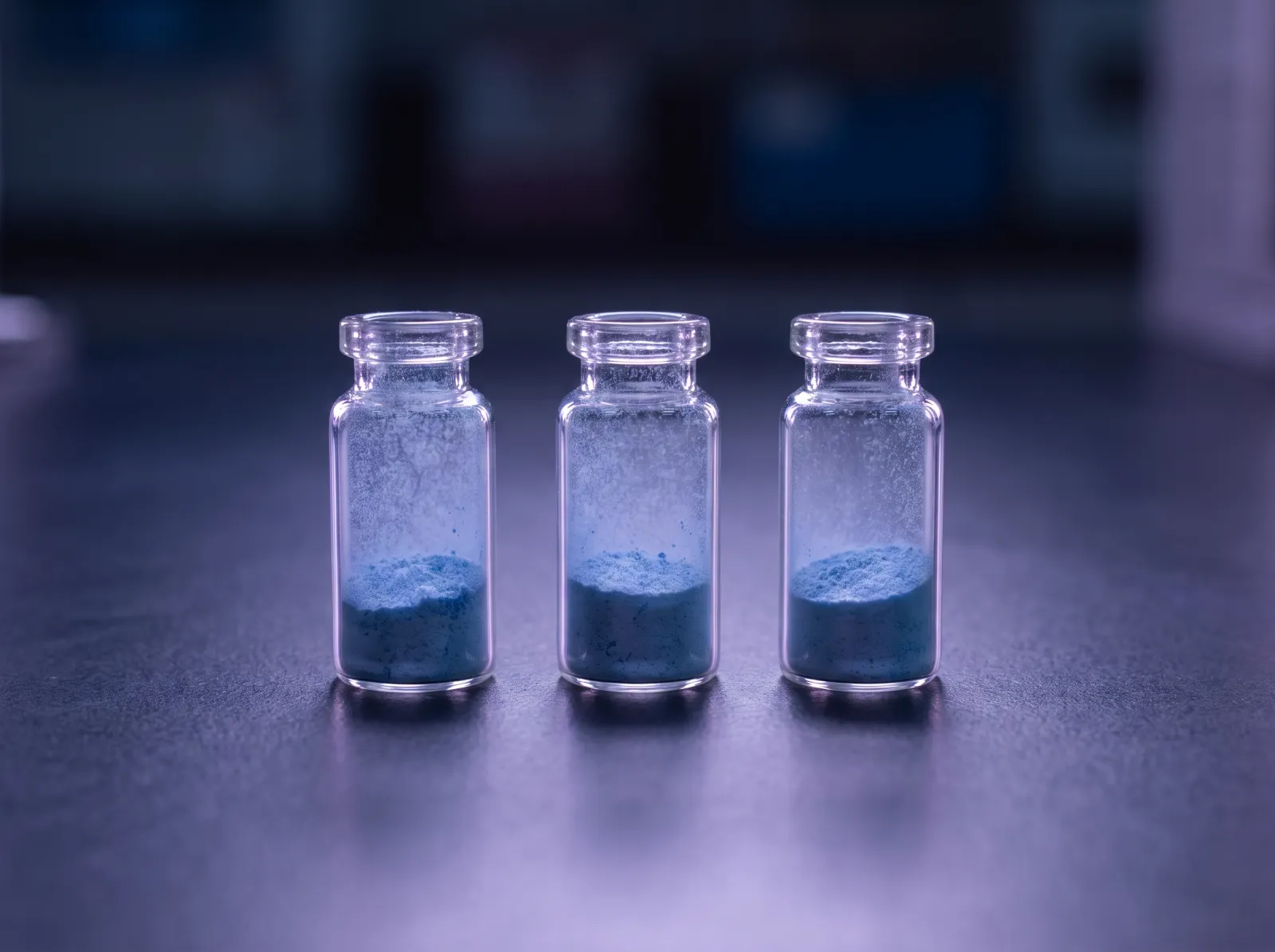
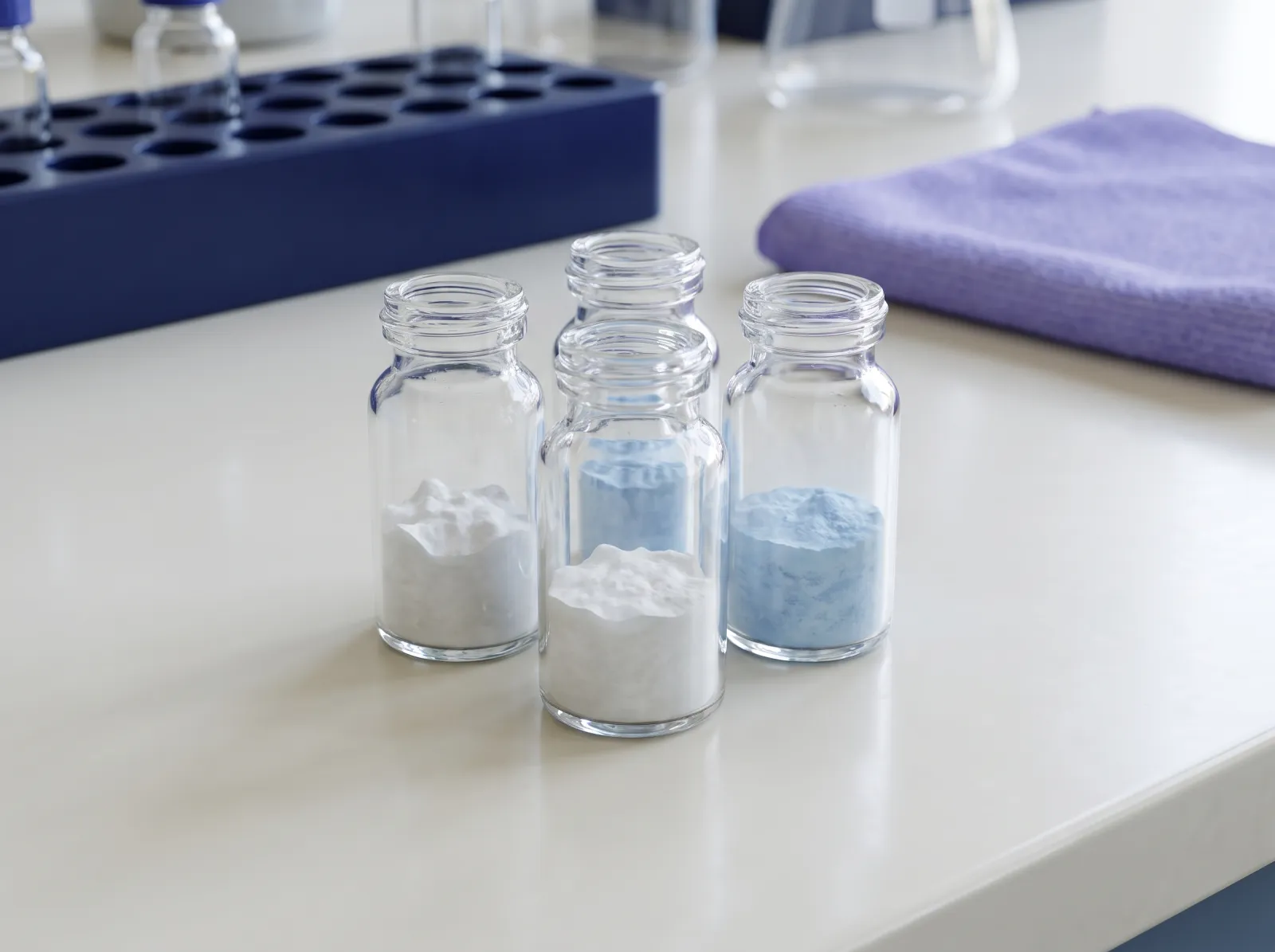
GLOW is an informal market name rather than a fixed recipe. Our Glow Gen research blend lists its formulation as GHK-Cu 50 mg, BPC-157 10 mg and TB-500 10 mg, giving 70 mg of total active content in one vial. The listing notes that the lyophilized cake may look pale blue because of its copper content.
The three components are very different molecules:
By stated mass, GHK-Cu makes up roughly 71% of Glow Gen’s content, so it is the dominant component of this blend.
KLOW keeps the three GLOW components and adds KPV, the tripeptide lysine-proline-valine that matches the final three amino acids of alpha-melanocyte-stimulating hormone. Our KLOW Blend 80mg names four components (GHK-Cu, BPC-157, TB-500 and KPV) and states 80 mg of combined active peptides.
Unlike Glow Gen, the KLOW listing does not itemize how much of each peptide is present. The 10 mg difference between the two totals should not be assumed to be KPV. Since KLOW is an informal name rather than a defined formulation, proportions are not standardized across suppliers either, so the product listing and batch paperwork matter more than the name.
KPV is the reason KLOW is discussed as a separate blend. Its research centres on inflammatory signalling in cell culture and rodent models, which our guide to what KPV peptide is covers in detail.
The rationale for a blend is that each component has been studied along a different pathway: GHK-Cu in collagen and extracellular matrix work, BPC-157 in angiogenesis and tissue repair models, TB-500 in actin binding and cell migration, and KPV in inflammatory signalling. Combining them in one vial lets a laboratory work across several of those pathways in a single preparation.
The evidence for combinations is thin. In the only controlled combination study we found, a small exploratory rat study of Achilles tendon repair published in 2026, BPC-157 and TB-500 given together did not add benefit over either peptide alone. When we searched PubMed in September 2026, we found no published study testing GHK-Cu, BPC-157 and TB-500 together, with or without KPV.
Mixing also makes results harder to interpret, because any observation could come from one component, from an interaction, or from neither. Blend research is best treated as exploratory.

This table compares the two Flux blends using their product listings and Flux’s standard quality practices.
| Feature | GLOW (Glow Gen) | KLOW (KLOW Blend 80mg) |
|---|---|---|
| Named components | GHK-Cu, BPC-157, TB-500 | GHK-Cu, BPC-157, TB-500, KPV |
| GHK-Cu | 50 mg | Included, amount not itemized |
| BPC-157 | 10 mg | Included, amount not itemized |
| TB-500 | 10 mg | Included, amount not itemized |
| KPV | Not included | Included, amount not itemized |
| Total stated content | 70 mg | 80 mg combined |
| Purity specification | HPLC, minimum 99.0% | HPLC, minimum 99.0% |
| Lyophilized stock at Flux | Sealed at minus 20 degrees Celsius | Sealed at minus 20 degrees Celsius |
| Published studies of the full blend | None found | None found |
Researchers who need batch-level documentation can email fluxpeptides@gmail.com with an order number and batch ID to request the analysis for that batch.
Every ingredient has its own literature, and the evidence level differs by component:
None of these findings transfers automatically to a blend, and none establishes any effect of these blends in people. Flux does not publish dosing or usage protocols, and neither blend is authorized by Health Canada for human or veterinary use.
Flux’s KLOW Blend 80mg names four peptides: GHK-Cu, BPC-157, TB-500 and KPV. The listing states 80 mg of combined active peptides but does not give a per-component breakdown. Because KLOW is an informal market name rather than a defined formulation, composition is not standardized between suppliers, so check the specific listing.
No published study has tested KLOW as a blend, so there is no evidence describing what the combination does. Its individual components have separate and mostly preclinical literatures covering collagen and matrix biology, tissue repair models, cell migration and inflammatory signalling. KLOW is supplied for laboratory research only.
GLOW is an informal market name for a multi-peptide research blend. Flux’s version, Glow Gen, combines GHK-Cu, BPC-157 and TB-500 in a single vial, with a stated formulation of GHK-Cu 50 mg, BPC-157 10 mg and TB-500 10 mg (70 mg in total). The copper in GHK-Cu can give the lyophilized powder a pale blue tint.
No. Both are informal market names rather than defined pharmaceutical formulations, and neither appears as a defined blend in the peer-reviewed literature we searched. Researchers should record what a specific vial contains from its product listing and batch documentation rather than relying on the blend name.
Flux Peptides supplies each KLOW and GLOW blend strictly for laboratory research. It is not approved by Health Canada for human or veterinary use, and nothing in this article is medical advice.