
Are Peptides Legal in Canada? What to Know in 2026
Are peptides legal in Canada? Learn how Health Canada regulates peptides as drugs, what research use labels mean, and how WADA rules…
Research guide
September 16, 2026
Are peptides steroids? No. Peptides are short chains of amino acids joined by peptide bonds, while steroids are lipids built on a skeleton of four fused carbon rings. The two families differ in structure, in how they act on cells, and in how regulators and sport authorities classify them.
The mix-up is understandable, because both come up in discussions of hormones, muscle and doping. This guide explains what each family is, how each signals to cells, where human growth hormone fits, and what the evidence says about safety.
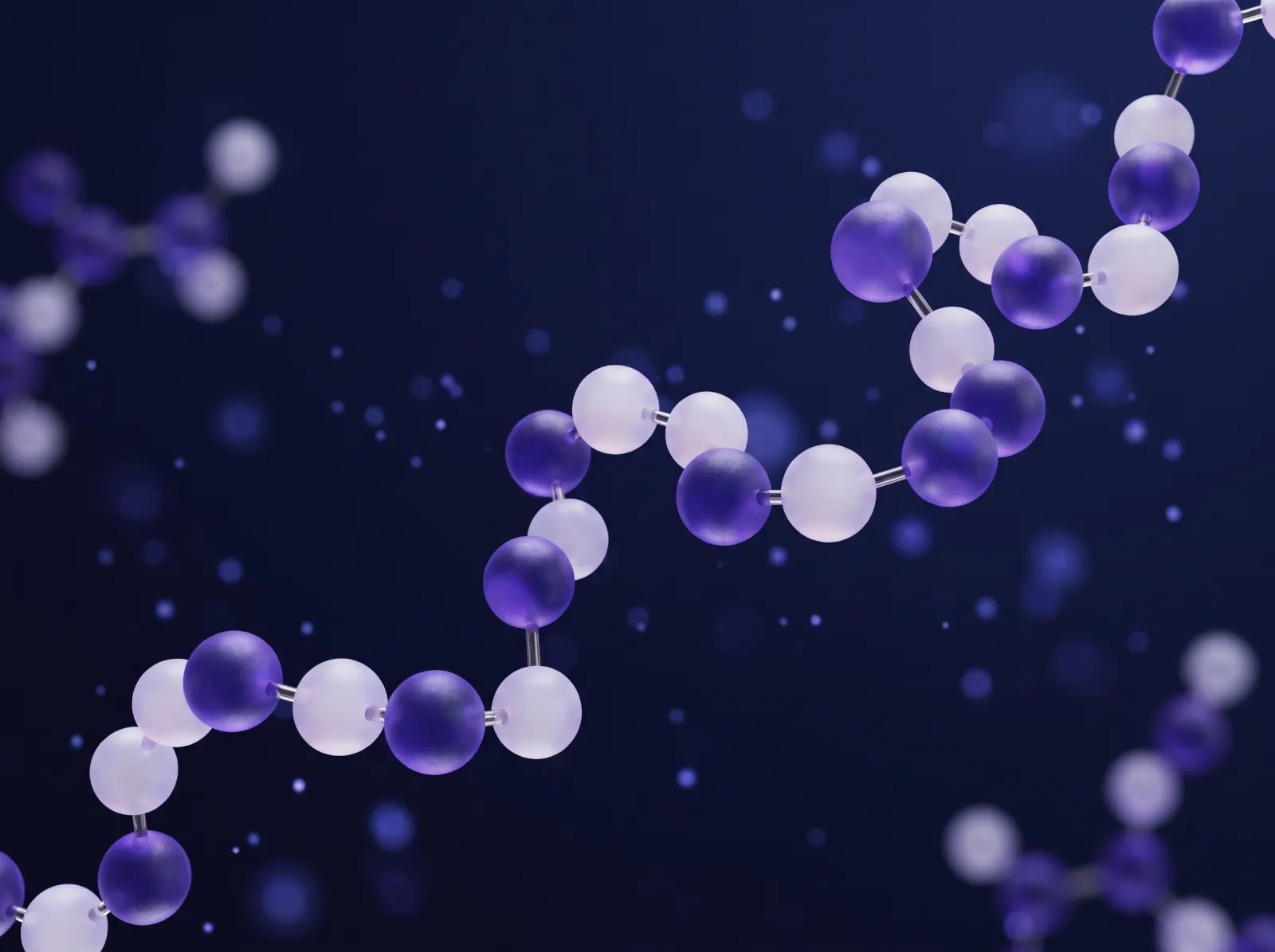
A peptide is a chain of amino acids linked by peptide bonds. Each bond forms through a condensation reaction that joins two amino acids and releases a molecule of water. The order of amino acids in the chain, its sequence, determines how the peptide folds and what it binds.
Length is what separates peptides from proteins, and the dividing line is a convention rather than a law of nature. A StatPearls review describes peptides as chains of 2 to 50 amino acids, with longer chains generally called proteins, though definitions vary between sources. For scale:
In the body, peptides serve as hormones, neuropeptides and antimicrobial defences.
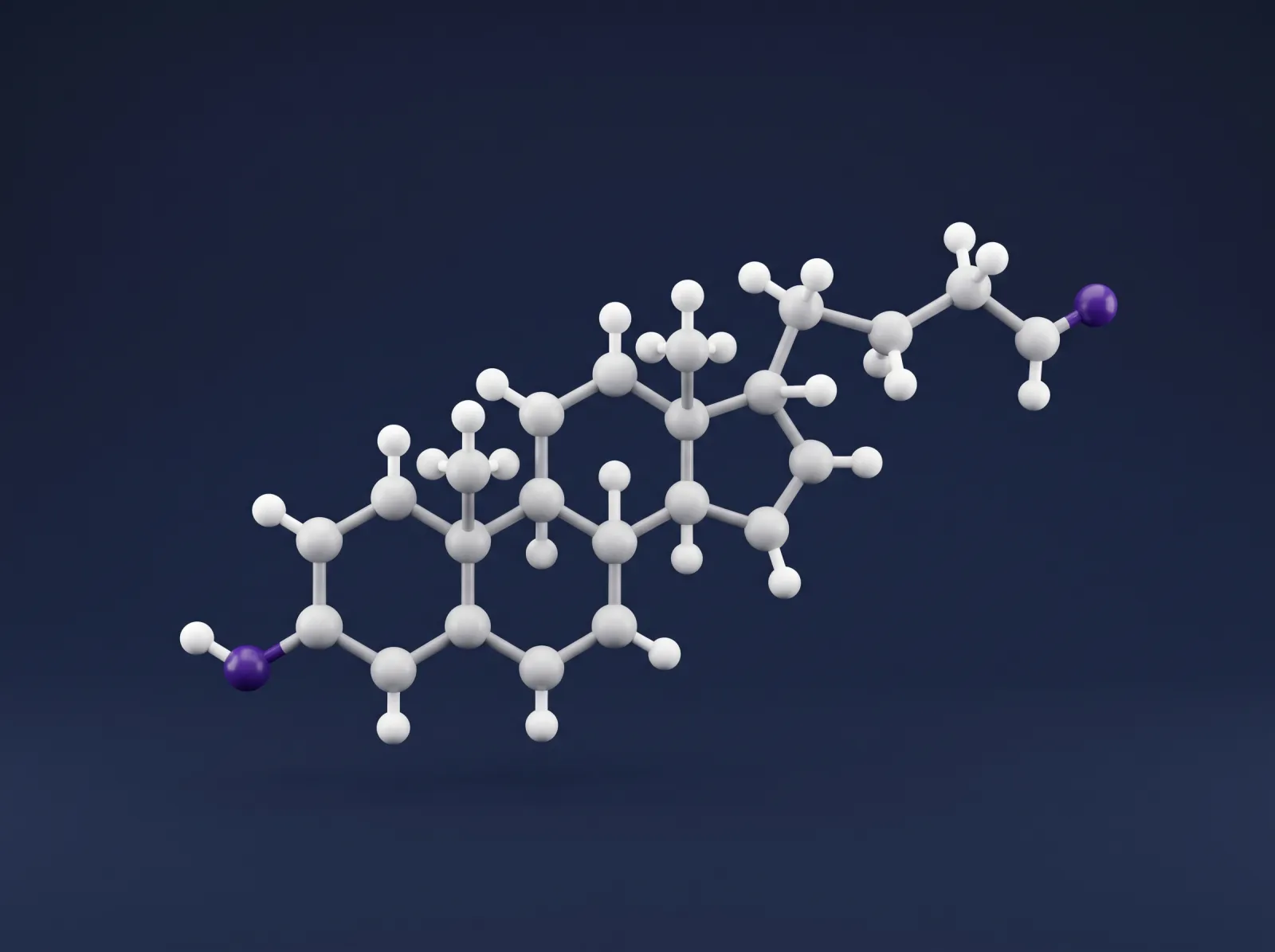
Steroids are lipids defined by their carbon skeleton. IUPAC nomenclature describes them as compounds built on the cyclopenta[a]phenanthrene skeleton: three six-membered rings and one five-membered ring fused together, normally with methyl groups at carbons 10 and 13. Changing the groups attached to that core produces molecules with very different roles.
In the body, steroid hormones are made from cholesterol. The family includes cortisol, aldosterone, estradiol and testosterone. None of them contains amino acids or peptide bonds, which is the simplest way to tell the two families apart.
Anabolic-androgenic steroids, usually shortened to anabolic steroids, are one subgroup: synthetic substances related to testosterone, named for their anabolic effects on skeletal muscle and androgenic effects on male sexual characteristics. Corticosteroids such as prednisone are steroids too, but they form a separate group with different effects.
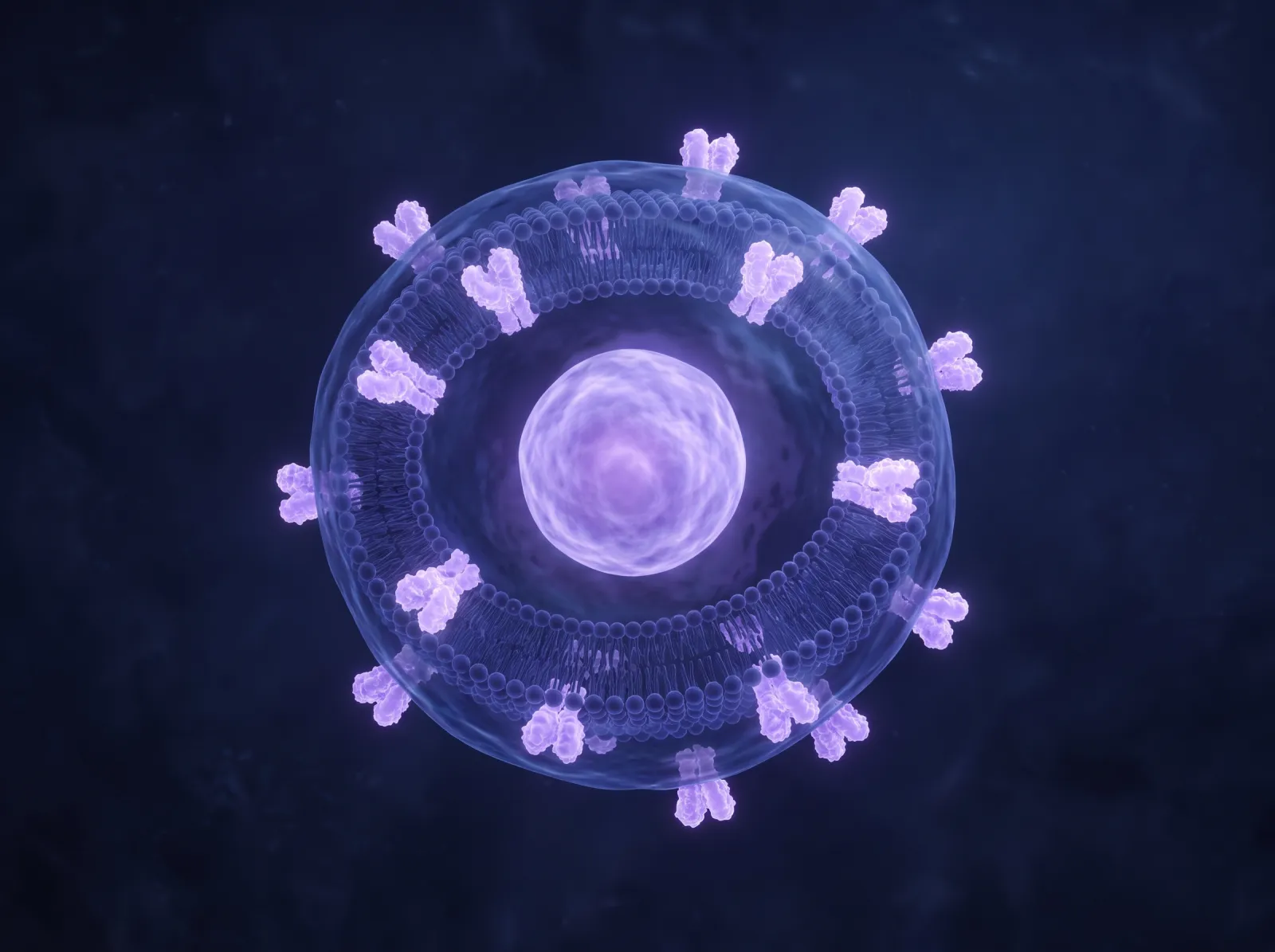
Chemistry drives the biology. Peptide hormones are water-soluble, so they cannot pass freely through the fatty membrane that surrounds a cell. Instead, they bind receptors on the cell surface, many of them G protein-coupled receptors, which relay the signal inward and amplify it through second messengers.
Research peptides are studied in the same framework. CJC-1295 is an analogue of growth hormone-releasing hormone (GHRH) that acts at the GHRH receptor, and ipamorelin acts at the ghrelin receptor; both are G protein-coupled receptors on pituitary cells. Our CJC-1295 No DAC and ipamorelin blend combines 5 mg of each in one vial for laboratory research.
Steroid hormones take the opposite route. Because they are lipophilic, they diffuse across the cell membrane and bind receptors inside the cell. A StatPearls review notes that all steroid hormone receptors act as transcription factors: once activated, they bind DNA and alter gene transcription. A peptide docking at a surface receptor and a steroid changing gene activity in the nucleus are fundamentally different mechanisms.
Here is how the two families compare on the points that matter most.
| Feature | Peptides | Steroids |
|---|---|---|
| Building blocks | Amino acids joined by peptide bonds | Four fused carbon rings (three six-membered, one five-membered) |
| Solubility | Mostly water-soluble | Fat-soluble (lipophilic) |
| Where they act | Mostly receptors on the cell surface | Receptors inside the cell that regulate gene transcription |
| Natural examples | Oxytocin, insulin, glucagon | Cortisol, estradiol, testosterone |
| WADA Prohibited List | Peptide hormones and growth factors in S2; non-approved peptides such as BPC-157 in S0 | Anabolic androgenic steroids in S1 |
| Canadian classification | Generally regulated as prescription drugs | Anabolic steroids listed in Schedule IV of the Controlled Drugs and Substances Act |
Human growth hormone (hGH, or somatropin) is often called a peptide hormone, but by size it is a protein. The U.S. label for Genotropin, a somatropin medicine, describes a protein of 191 amino acid residues with a molecular weight of 22,124 daltons, identical in sequence to pituitary growth hormone. It is not a steroid: it has no steroid ring skeleton, and it acts through cell-surface receptors, including those that prompt liver cells to release insulin-like growth factor 1 (IGF-1).
Several research peptides relate to this axis without being growth hormone. GHRH analogues and ghrelin receptor agonists act upstream at the pituitary, and IGF-1 LR3 is an 83-amino-acid analogue of IGF-1 (see our IGF-1 LR3 research listing). WADA’s S2 class covers growth hormone, GHRH analogues, growth hormone secretagogues, IGF-1 and its analogues, and thymosin beta-4 derivatives such as TB-500.
Classification is where the two families part ways most clearly. In Canada, anabolic steroids and their derivatives are listed in Schedule IV of the Controlled Drugs and Substances Act, while research peptides such as BPC-157, TB-500 and CJC-1295 are not named in that Act. Health Canada instead says peptides are generally regulated as prescription drugs, and it has warned that unauthorized peptide drugs are illegal to sell even when labelled for research use only. Our guide Are Peptides Legal in Canada? covers that framework.
Sport uses its own categories. WADA’s 2026 Prohibited List places anabolic agents in S1, peptide hormones and growth factors in S2, and non-approved substances such as BPC-157 in S0, all prohibited at all times. Outside Canada, the legal status of any peptide depends on local law.
There is no single answer, because “peptides” spans approved medicines and compounds with almost no human data. Authorized peptide medicines such as insulin have been assessed by regulators for safety, efficacy and quality for specific uses, and they are prescribed under medical supervision.
Many research peptides sit at the other end. A 2025 systematic review of BPC-157 in HSS Journal included 36 studies, 35 preclinical and one clinical, and found no clinical safety data. Health Canada warns that unauthorized peptide drugs may contain too much, too little or none of the active ingredient, or contaminants. For research material, batch-level analysis is the baseline, as our guide to peptide purity testing explains. Any question about a substance and a person’s health belongs with a qualified healthcare professional.
Peptides are molecules made of amino acids joined by peptide bonds, usually 2 to about 50 units long; longer chains are generally called proteins. The body uses peptides as hormones such as insulin and oxytocin, as neuropeptides and as antimicrobial defences. Not everything sold alongside peptides is one: NAD+ is a nucleotide-based coenzyme, as our explainer Is NAD+ a Peptide? sets out.
It depends on the sequence. Natural peptides carry signals between cells: insulin and glucagon help regulate blood glucose, oxytocin acts as a hormone, and antimicrobial peptides form part of the body’s first line of defence against infection. Many research peptides are studied mainly in cell and animal models for how they interact with particular receptors and pathways. Flux does not publish dosing or usage information, and its products are not for human use.
No. BPC-157 is a synthetic peptide of 15 amino acids with no steroid ring skeleton. It is not listed among the anabolic steroids in Canada’s Controlled Drugs and Substances Act, and WADA classifies it under S0, non-approved substances, rather than S1, anabolic agents.
Flux Peptides supplies BPC-157, TB-500 and its other research peptides strictly for laboratory research. They are not approved by Health Canada for human or veterinary use, and nothing in this article is medical advice.