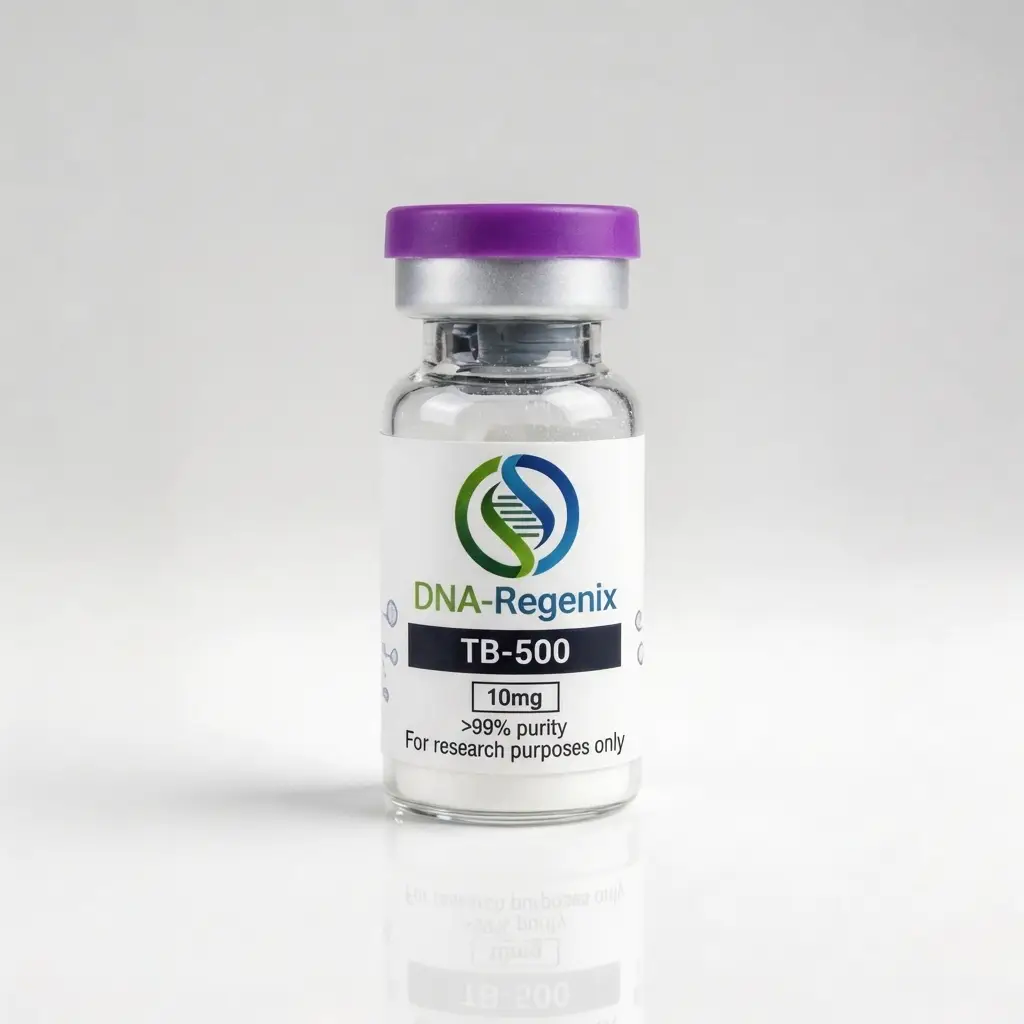
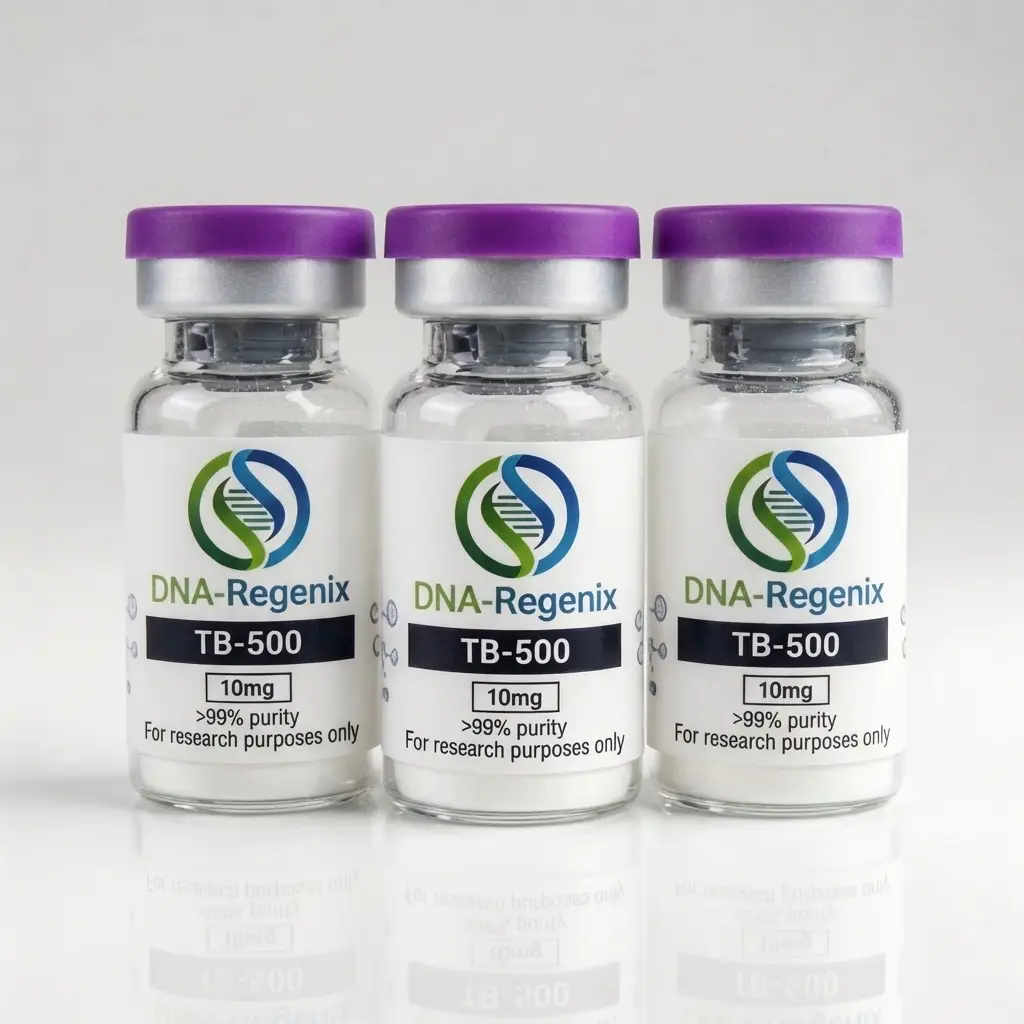
Description
TB-500 (Thymosin Beta-4 Derived Peptide)
TB-500 is a synthetic peptide derived from thymosin beta-4 (Tbeta4). The name is used for peptides based on the actin binding region of Tbeta4 (Ac-LKKTETQ, residues 17 to 23); some suppliers apply it to full length synthetic Tbeta4. The batch certificate of analysis confirms which form a vial contains.
The two forms are different molecules and should not be described with the same figures. The acetylated heptapeptide Ac-Leu-Lys-Lys-Thr-Glu-Thr-Gln has a mass near 889 g/mol; full length synthetic Tbeta4 is a 43 residue peptide with the formula C212H350N56O78S and a mass near 4963 g/mol. The specifications below are those of the heptapeptide, which is the form PubChem returns for the name TB-500 and the form this listing is supplied as.
Research on this sequence concerns actin binding. Tbeta4 is present in most cell types, and the LKKTETQ region is the part of the parent protein associated with actin interaction, which is why the short synthetic peptide is used in place of the full protein in many experiments.
Technical Specifications
- Peptide Name: TB-500 (thymosin beta-4 derived peptide, acetylated heptapeptide form)
- Sequence: Ac-Leu-Lys-Lys-Thr-Glu-Thr-Gln
- Corresponds to: Tbeta4 residues 17 to 23
- CAS Number: 885340-08-9
- Molecular Formula: C38H68N10O14
- Molar Mass: 889.0 g/mol
- PubChem CID: 62707662
- Purity: ≥99.0% (determined by HPLC)
- Appearance: White lyophilized powder
- Solubility: Soluble in sterile water or bacteriostatic water
Research Context
- Actin sequestration. TB-500 is studied as a G-actin binding peptide. By binding monomeric actin it has been investigated for effects on actin polymerisation and on the cytoskeleton, which underlies cell shape and cell motility (cell level).
- Endothelial cell migration. Work on Tbeta4 and on this fragment has examined endothelial cell migration and differentiation in culture and vessel formation markers in animal models (cell and animal level).
- Fibroblast and myofibroblast behaviour. Studies have examined effects on inflammatory signalling and on myofibroblast populations in animal tissue models. These are laboratory endpoints and have not been established as outcomes in a person (animal level).
- Anti-doping status. The World Anti-Doping Agency Prohibited List names Thymosin-beta4 and its derivatives, giving TB-500 as the example, in section S2 (peptide hormones, growth factors, related substances and mimetics), prohibited at all times. This is relevant to any research programme involving athletes.
Storage and Handling
- Lyophilized (Powder): Store at -20°C (-4°F) for long-term stability. The freeze dried form is the stable presentation; keep away from direct UV light and moisture.
- Reconstituted (Solution): Once dissolved in a research solvent, keep the solution at 4°C (39°F) and use within 14 days. Avoid repeat freeze thaw cycles of the solution.
- Handling: Standard laboratory safety practice applies. This product is for laboratory research use only.
Testing and Quality Control
- HPLC (high performance liquid chromatography): to determine a purity profile against the ≥99.0% specification.
- MS (mass spectrometry): to verify the molecular identity of the Ac-LKKTETQ sequence.
- Domestic Quality Check: Visual inspection of the vial and lyophilized cake before dispatch from the Canadian facility.
HPLC and mass spectrometry establish purity and identity only. Neither technique measures biological activity, so no potency conclusion is drawn from them.
For laboratory research use only. Not for human or veterinary use.
Further reading