Flux Peptides
$0.00 0

Cart

No products in the cart.

GHK-CU

$50.00

GHK-Cu is the copper(II) complex of the tripeptide glycyl-L-histidyl-L-lysine (GHK), a sequence that occurs in human plasma. It is studied in cell culture and animal models of extracellular matrix turnover, including collagen synthesis and the expression of matrix proteins.

  • Fast Domestic Shipping: Dispatched from within Canada (no customs delays)
  • Purity: ≥99.0% (HPLC tested)
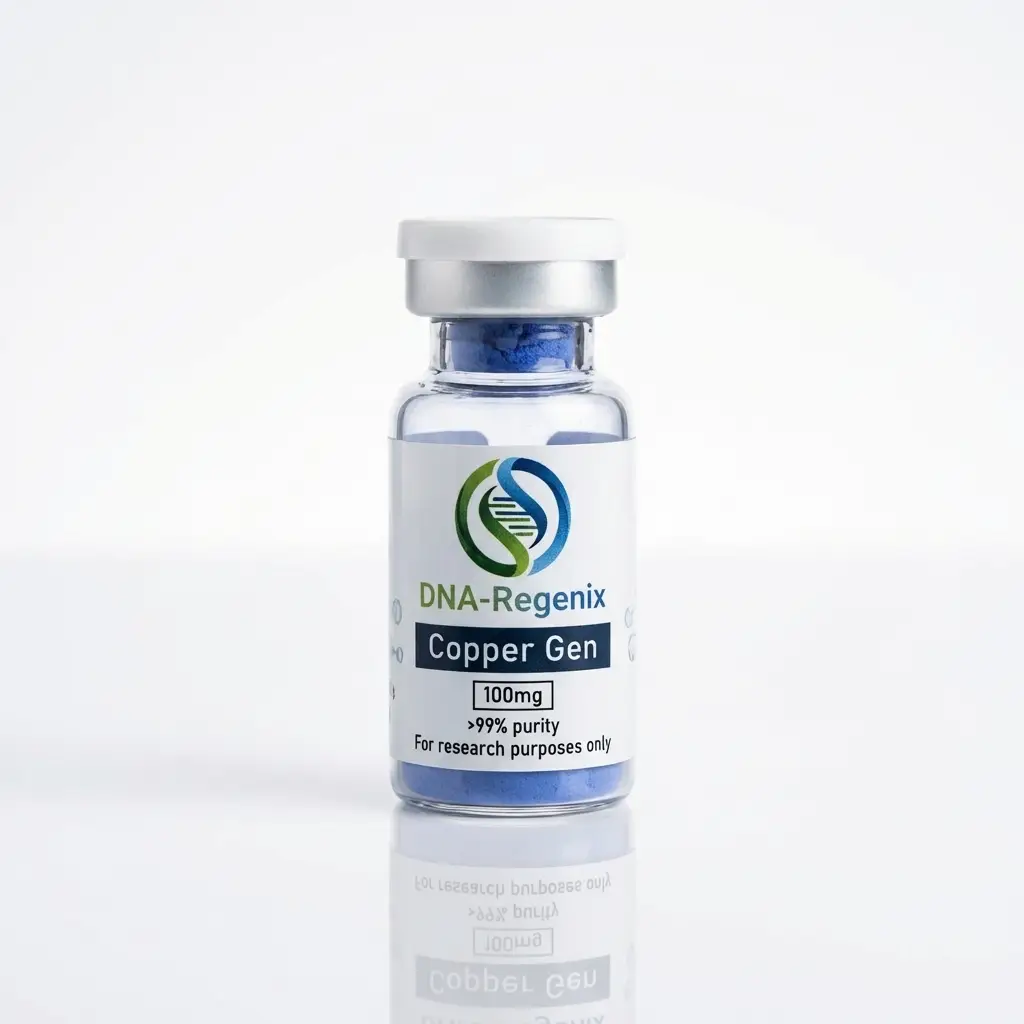
  • Appearance: Characteristic deep blue lyophilized powder
  • Key Research Focus: Extracellular matrix signalling and TGF-beta pathway studies
  • Storage: Store at minus 20 degrees Celsius, sealed and protected from light and moisture
SKU: FLX-GHKCU-100MG Category:

Description

GHK-Cu (Copper Peptide)

GHK-Cu is the copper(II) complex of glycyl-L-histidyl-L-lysine, a tripeptide first identified in human plasma. In substance registries the complex is recorded as prezatide copper. It is not an approved medicine in Canada or the United States, and the material supplied here is a research chemical.

GHK and GHK-Cu have been studied in fibroblast and keratinocyte cultures and in animal models. Published endpoints include collagen, dermatan sulfate and chondroitin sulfate production, gene expression profiling, and the measurement of inflammatory and oxidative stress markers. These are laboratory observations and have not been established in controlled human trials.

Technical Specifications

  • Peptide Name: GHK-Cu (copper peptide)
  • Sequence: Gly-His-Lys, complexed with copper(II)
  • Registry Name: Prezatide copper
  • CAS Number: 89030-95-5, the number supplier documentation and certificates of analysis normally print for copper tripeptide-1. Public registries disagree on identifiers for this complex (PubChem maps 89030-95-5 to prezatide copper, while the FDA substance registry maps it differently), so confirm the number on your batch paperwork.
  • Molecular Formula: C14H22CuN6O4
  • Molar Mass: 401.91 g/mol
  • Purity: ≥99.0% (determined by HPLC)
  • Appearance: Deep blue lyophilized powder
  • Solubility: Soluble in sterile water

Research Context

Pathways that have been examined in the published literature include:

  • Extracellular matrix proteins: Fibroblast culture studies have measured changes in collagen and elastin production following exposure to GHK-Cu.
  • Inflammatory and oxidative stress markers: Studies have measured cytokines such as TNF-alpha and IL-6 and the activity of antioxidant enzymes including superoxide dismutase.
  • Angiogenesis: GHK-Cu has been used in cell and animal models that assess capillary formation.
  • Nerve growth factor expression: Cell and animal studies have measured nerve growth factor expression after exposure to GHK-Cu.
  • Copper transport: The complex is studied as a copper-binding ligand, and work in this area examines how copper is delivered to and taken up by cells.

These are observations in laboratory models and should not be read as describing effects in a person or an animal outside a controlled study.

Storage and Handling

  • Lyophilized (powder): Store at minus 20 degrees Celsius, sealed and protected from light and moisture; see the batch documentation for the retest date. The deep blue colour reflects the copper complex.
  • Reconstituted (liquid): Keep refrigerated at 4 degrees Celsius and protected from light. Extreme pH shifts affect the complex, so buffer selection matters in experimental design.
  • Handling: Standard laboratory safety protocols apply. This product is for laboratory research use only.

Testing and Quality Control
Every batch of GHK-Cu is released against the following checks:

1. HPLC (high-performance liquid chromatography): to confirm a purity profile of ≥99.0%.
2. MS (mass spectrometry): to confirm the molecular weight and identity of the tripeptide.
3. Copper complex verification: to confirm the molar ratio of copper to peptide.

For laboratory research use only. Not for human or veterinary use.

Further reading