Flux Peptides
$0.00 0

Cart

No products in the cart.

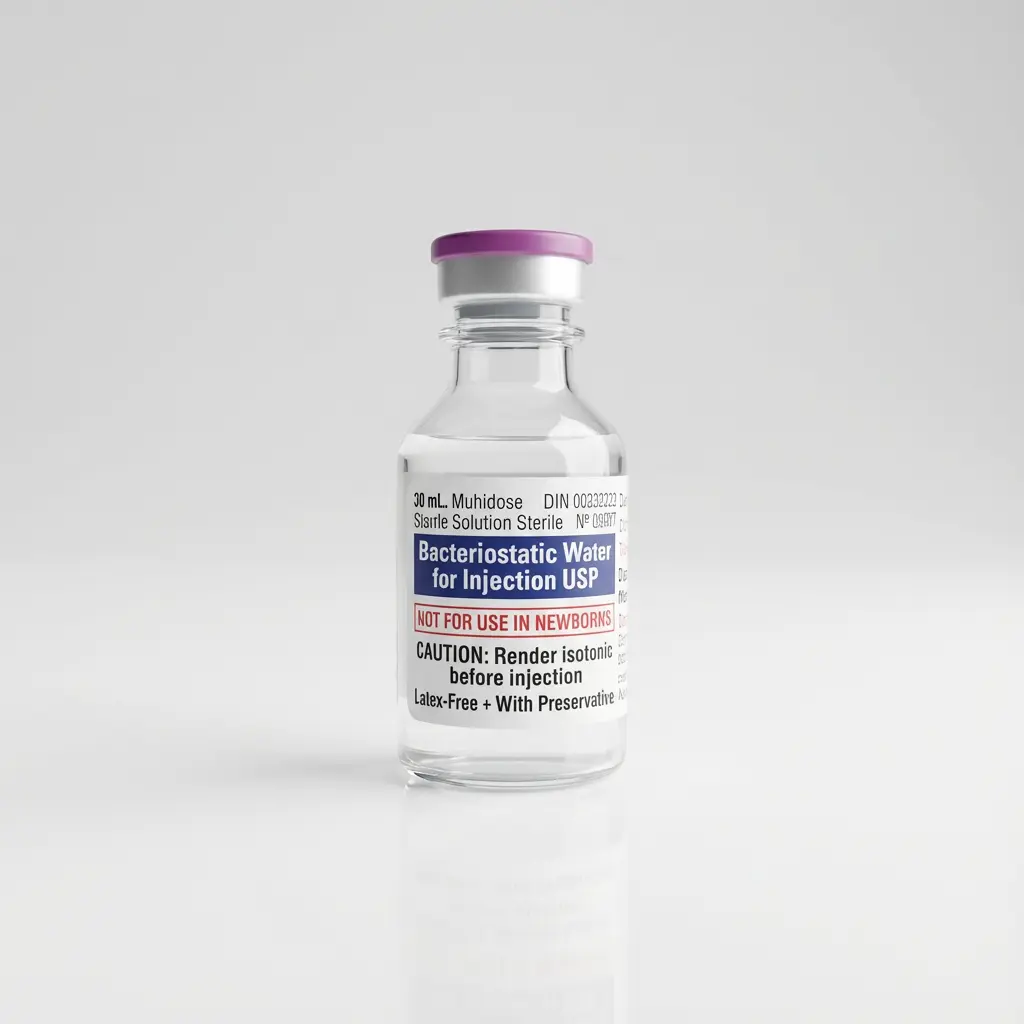
Bacteriostatic Water

$15.00

Bacteriostatic Water is Sterile Water for Injection (USP) containing 0.9% (9 mg/mL) benzyl alcohol as a bacteriostatic preservative. It is supplied as a 30mL multiple-dose vial and is used in the laboratory as a solvent for reconstituting lyophilized research compounds.

  • Volume: 30mL (multiple-dose vial)
  • Composition: Sterile Water for Injection (USP) plus 0.9% (9 mg/mL) benzyl alcohol
  • Grade: Laboratory and pharmaceutical grade
  • Preservative Function: Benzyl alcohol inhibits the growth of bacteria. It does not sterilize the contents and it does not keep a punctured vial sterile.
  • Storage: Store at 20 to 25 degrees Celsius (68 to 77 degrees Fahrenheit), the manufacturer’s stated condition
SKU: FLX-BACWATER-30ML Category:

Description

Bacteriostatic Water Overview

This is a preparation of Sterile Water for Injection (USP) containing 0.9% (9 mg/mL) benzyl alcohol as a bacteriostatic preservative. In laboratory work it is used as a solvent for reconstituting lyophilized research compounds.

What the Benzyl Alcohol Does, and What It Does Not Do

Benzyl alcohol is a bacteriostatic agent: it inhibits the growth of bacteria. It does not sterilize the contents of the vial, and it does not keep a vial sterile once the stopper has been punctured. Plain Sterile Water for Injection carries no preservative and is intended for a single entry, whereas a preserved multiple-dose container is designed to tolerate repeated withdrawals.

The figure of 28 days is a beyond-use date, not a period of guaranteed sterility. Pharmacy standards for multiple-dose containers, USP General Chapter 797, set a maximum beyond-use date of 28 days after the container is first entered or punctured when the preservative system is supported by antimicrobial effectiveness testing under USP General Chapter 51. The United States Centers for Disease Control and Prevention states the same limit for practice: once a multiple-dose vial is opened, it should be dated and discarded within 28 days unless the manufacturer states another date. Those standards are written for clinical and compounding practice. They are cited here as the reference point for the 28 day figure, and this product is supplied for laboratory use only.

Why Researchers Use Bacteriostatic Water

  • Repeated Withdrawals: The preservative system is what allows a multiple-dose container to be entered more than once, which suits laboratory work with a reconstituted compound that is drawn on over a period of weeks rather than at a single sitting.
  • Established Composition: The composition, purity and pH are defined by the USP monograph and by the manufacturer’s label rather than being specific to this seller.
  • Supplied Sterile: The preparation is sterile and nonpyrogenic as supplied, before the stopper is punctured.

Technical Specifications

  • Container: 30mL multiple-dose vial
  • Preservative: 0.9% (9 mg/mL) benzyl alcohol
  • pH: 5.7 (range 4.5 to 7.0)
  • Condition as Supplied: Sterile and nonpyrogenic
  • Storage: Store at 20 to 25 degrees Celsius (68 to 77 degrees Fahrenheit), which is USP Controlled Room Temperature and the condition stated on the manufacturer’s label. This applies before and after the first puncture.
  • Optional Refrigeration: Some laboratories keep a punctured vial at 2 to 8 degrees Celsius. This is optional, it departs from the manufacturer’s stated storage condition, and it does not extend the 28 day beyond-use date.

Laboratory Handling Notes

  1. Wipe the stopper of both the water vial and the compound vial with an alcohol swab before each entry.
  2. Withdraw the required volume with a sterile syringe and a fresh needle for each entry.
  3. Direct the stream against the glass wall of the receiving vial rather than onto the lyophilized cake.
  4. Swirl gently until dissolved. Do not shake.
  5. Mark the vial with the date of first puncture and discard it no later than 28 days after that date.

For laboratory research use only. Not for human or veterinary use.

Further reading