Are Peptides Legal in Canada? What to Know in 2026
Are peptides legal in Canada? Learn how Health Canada regulates peptides as drugs, what research use labels mean, and how WADA rules…
Research guide
September 16, 2026
Tesamorelin vs sermorelin comes down to length, chemical modification and regulatory history. Both are synthetic analogues of growth hormone-releasing hormone (GHRH) that act on the same pituitary receptor. Tesamorelin keeps all 44 amino acids of human GHRH and adds a hexenoyl group that helps it resist enzymatic breakdown; sermorelin is the shorter 29-amino-acid fragment, GHRH(1-29), with no protective group.
Tesamorelin is the active ingredient in Egrifta, an FDA-approved prescription medicine for reducing excess abdominal fat in adults with HIV who have lipodystrophy. Sermorelin was marketed as Geref until its manufacturer discontinued it in 2008. Below, each peptide is explained, then compared side by side.
Tesamorelin is a synthetic analogue of GHRH, the hypothalamic hormone that signals pituitary somatotroph cells to release growth hormone. Its FDA prescribing information describes the full 44-amino-acid sequence of human GHRH with a hexenoyl group (a six-carbon chain with a double bond at position 3) attached to the N-terminal tyrosine. In vitro, it stimulates human GHRH receptors with potency similar to the natural hormone.
That small addition matters. Natural GHRH is inactivated when the enzyme dipeptidyl peptidase-4 (DPP-4) clips off its first two amino acids. In preclinical work published in 2007, the trans-3-hexenoyl group made tesamorelin (then coded TH9507) resistant to DPP-4 and slowed its breakdown in rat, dog and human plasma in laboratory tests.
Yes. The FDA approved it as Egrifta in November 2010 for reducing excess abdominal fat in adults with HIV who have lipodystrophy, and approved a newer formulation, Egrifta WR, in March 2025. These are prescription medicines. Our research-grade tesamorelin is not Egrifta and is not for human use.
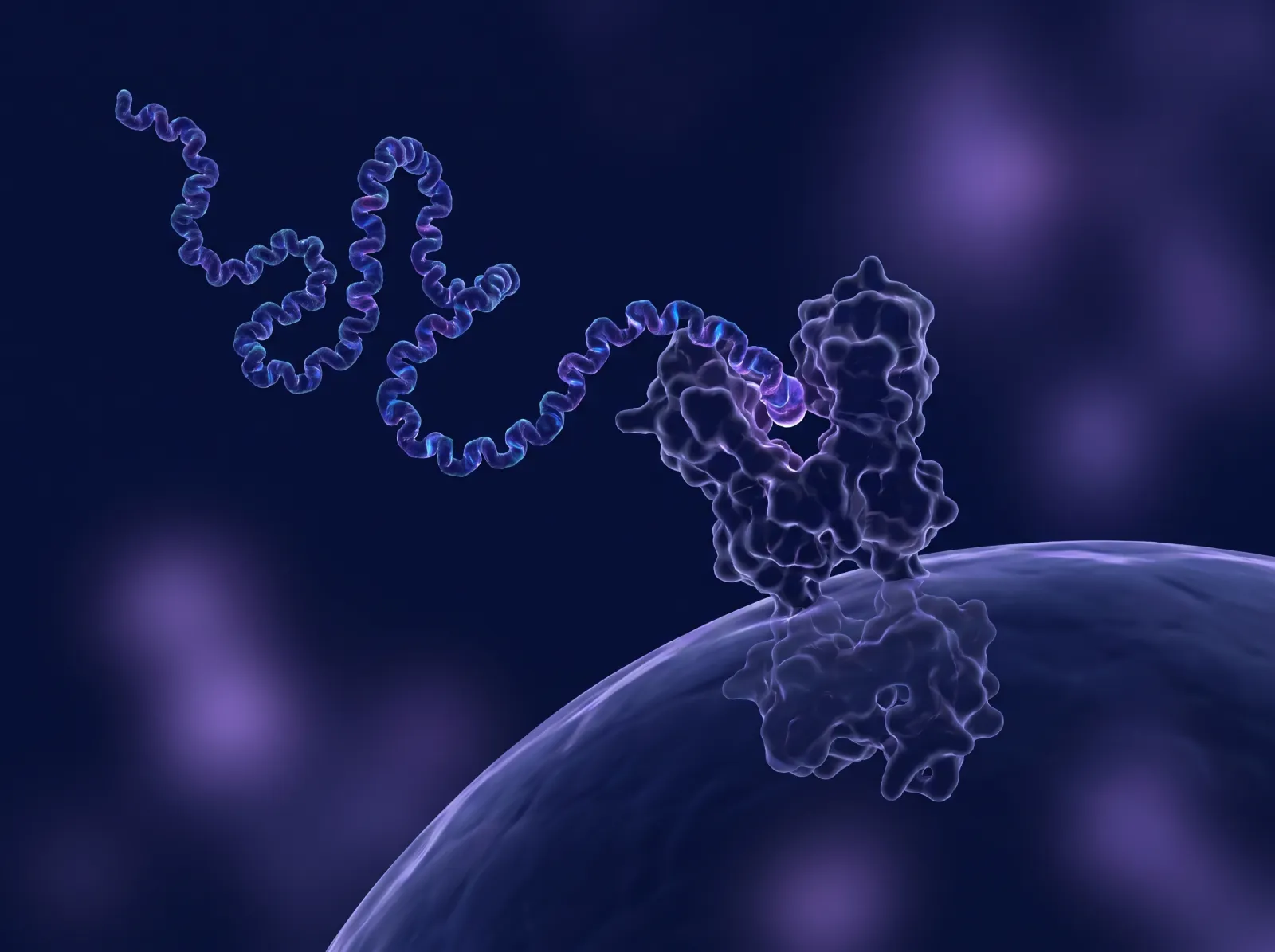
Sermorelin is the first 29 amino acids of human GHRH with an amide at the C-terminal end, often written GRF(1-29) or GHRH(1-29)-NH2. A 1999 review in BioDrugs describes it as the shortest synthetic peptide with the full biological activity of GHRH. It acts on the same pituitary GHRH receptors, prompting the gland to release its own growth hormone.
Without a protective group, sermorelin is short-lived. A 1994 study in 10 healthy men measured a disappearance half-time of about 4 minutes for GHRH(1-29)-NH2, and a 2016 doping-control study detected its DPP-4 breakdown product, GHRH(3-29), in a volunteer’s plasma.
Its regulatory story is unusual. The FDA approved Geref (sermorelin acetate) in 1990 as a diagnostic agent for testing pituitary growth hormone secretion, and in 1997 for idiopathic growth hormone deficiency in children with growth failure. EMD Serono discontinued both products in 2008, and in 2013 the FDA determined they were not withdrawn for reasons of safety or effectiveness. Our sermorelin 5mg research peptide is research-grade material, not Geref.
The two peptides share a receptor but differ in four practical ways.

| Feature | Tesamorelin | Sermorelin |
|---|---|---|
| Other names | TH9507; Egrifta, Egrifta SV, Egrifta WR (medicines) | GRF(1-29), GHRH(1-29)-NH2; Geref (discontinued medicine) |
| Structure | All 44 amino acids of human GHRH | First 29 amino acids of human GHRH, C-terminal amide |
| Modification | Trans-3-hexenoyl group on the N-terminal tyrosine | None |
| Target | GHRH receptor on pituitary somatotrophs | GHRH receptor on pituitary somatotrophs |
| DPP-4 | Resistant in preclinical tests | Cleaved to GHRH(3-29) |
| Reported half-life | Mean 8 minutes in healthy subjects (Egrifta SV label) | About 4 minutes in healthy men (1994 study) |
| FDA history | Approved 2010; Egrifta WR formulation approved 2025 | Approved 1990 (diagnostic) and 1997 (pediatric growth hormone deficiency); discontinued 2008 |
| Canada | Egrifta marketed from 2015; listed as cancelled post-market in 2022 | No product found in Health Canada’s Drug Product Database |
| Main human research | Randomized trials in adults with HIV and excess abdominal fat | Pituitary function testing; children with idiopathic growth hormone deficiency |
| At Flux | Research-grade tesamorelin, not for human use | Research-grade sermorelin 5mg, not for human use |
The half-life figures come from different study designs, so read them as orders of magnitude: both peptides are cleared within minutes. Long-acting behaviour comes from a different design, CJC-1295 with DAC, explained in our guide to CJC-1295 with DAC vs no DAC.
Here is what the science says, and where Flux stands. Tesamorelin and sermorelin are different molecules that act on the same target, the GHRH receptor on pituitary somatotroph cells. Pairing two agonists of one receptor is a different idea from pairing agonists of two different receptors, which is the rationale behind research blends that combine a GHRH analogue with a ghrelin receptor agonist, such as our CJC-1295 No DAC / Ipamorelin blend.
Our search of the published literature found no studies that combined tesamorelin with sermorelin. Flux Peptides does not publish dosing, stacking or usage protocols of any kind, and its products are not for human use. Questions about an individual’s health belong with a qualified healthcare professional.
Egrifta and Geref were manufactured, labelled and prescribed as medicines under regulatory oversight. Research-grade tesamorelin and sermorelin are laboratory reagents that are not authorized by Health Canada for human or veterinary use; our guide Are Peptides Legal in Canada? explains the framework in general terms.
Both are supplied as lyophilized powder. Flux assays every batch by HPLC against a minimum 99.0% purity specification and holds stock sealed at minus 20 degrees Celsius; see how to store peptides for handling lyophilized and reconstituted material.
“Better” depends on the research question. CJC-1295 is also built on GHRH(1-29), but with four amino acid substitutions at known weak points of the natural sequence. The version with DAC binds albumin, and a 2006 study in healthy adults estimated its half-life at 5.8 to 8.1 days, versus minutes for sermorelin. CJC-1295 has not been approved as a medicine in Canada or the United States; sermorelin once was.
No. Geref, the brand under which sermorelin was FDA approved, was discontinued by EMD Serono in 2008, and its approvals were withdrawn in 2009. In 2013 the FDA published a determination that Geref was not withdrawn for reasons of safety or effectiveness. Sermorelin sold today as a research chemical is not an approved medicine.
Neither lasts long. The Egrifta SV prescribing information reports a mean elimination half-life of about 8 minutes for tesamorelin in healthy subjects, and a 1994 study measured a disappearance half-time of about 4 minutes for GHRH(1-29)-NH2, the sermorelin sequence. Tesamorelin’s hexenoyl group improves resistance to DPP-4, but both remain short-acting compared with albumin-bound analogues.
Flux Peptides supplies research-grade tesamorelin and sermorelin strictly for laboratory research. They are not approved by Health Canada for human or veterinary use, and nothing in this article is medical advice.