Flux Peptides
$0.00 0

Cart

No products in the cart.

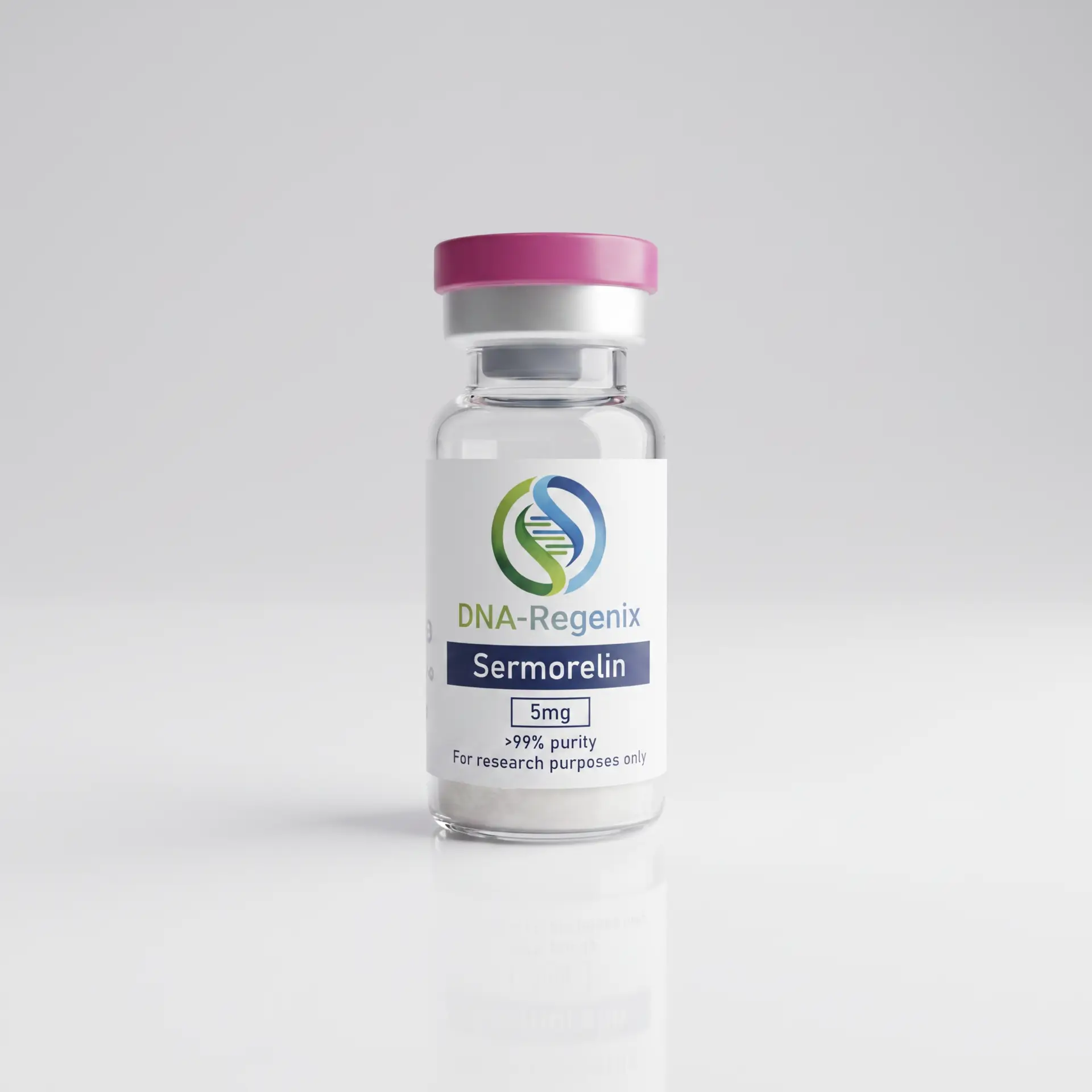
Sermorelin 5mg

$50.00

Sermorelin is a synthetic 29 amino acid peptide corresponding to the 1 to 29 N terminal fragment of human growth hormone releasing hormone (GHRH). The GHRH(1 to 29) fragment retains activity at the pituitary GHRH receptor, which is why it is used in endocrinology research on the pituitary step of the growth hormone axis. Sermorelin acetate was formerly marketed in the United States as Geref; the sponsor discontinued it in 2008. The lyophilized material on this page is a research chemical, not Geref and not a licensed medicine.

  • Purity: greater than or equal to 99.0 percent (HPLC tested)
  • Molecular target studied: pituitary GHRH receptor
  • Format: Lyophilized powder for laboratory research
  • Key Research Focus: GHRH receptor signalling and pituitary growth hormone secretion
  • Storage: Store at minus 20 degrees Celsius, sealed and protected from light and moisture
Category:

Description

Sermorelin Overview

Sermorelin (frequently supplied as sermorelin acetate) is a synthetic analog of human growth hormone releasing hormone (GHRH). Endogenous GHRH is a 44 amino acid peptide, and the 1 to 29 N terminal fragment retains activity at the GHRH receptor. Sermorelin acts at the GHRH receptor on anterior pituitary somatotrophs rather than at the growth hormone receptor, so experiments that use it examine the pituitary step of the growth hormone axis rather than the direct effects of growth hormone itself.

Regulatory status

Sermorelin acetate was an approved prescription medicine in the United States, marketed as Geref under new drug applications held by EMD Serono. Its vial presentations were indicated for idiopathic growth hormone deficiency in children with growth failure, and a separate ampoule presentation was indicated for evaluating the ability of the pituitary somatotroph to secrete growth hormone. The sponsor notified the FDA that it had discontinued these products in 2008, and in 2013 the FDA determined that they had not been withdrawn from sale for reasons of safety or effectiveness. The material offered on this page is a laboratory research chemical. It is not Geref, it is not a licensed or authorized medicine in Canada or any other country, and it is not supplied for any medical purpose.

Technical Specifications

  • Peptide name: Sermorelin
  • Synonyms: GHRH(1 to 29) amide, GRF(1 to 29)NH2, sermorelin acetate
  • CAS number: 86168-78-7
  • Molecular formula: C149H246N44O42S (free peptide)
  • Molar mass: 3357.9 g/mol
  • Purity: greater than or equal to 99.0 percent (determined by HPLC)
  • Appearance: White to off white lyophilized powder
  • Solubility: Soluble in sterile water

Research Context

Published work on sermorelin concerns the GHRH receptor and the pituitary:

  • GHRH receptor agonism: sermorelin has been studied as an agonist at the GHRH receptor, a G protein coupled receptor on pituitary somatotrophs that signals through adenylate cyclase and cyclic AMP.
  • Episodic secretion: because the peptide acts upstream of the pituitary rather than replacing growth hormone, it has been used in studies of episodic growth hormone release and of the somatostatin feedback that shapes that pattern.
  • Pituitary function testing: the GHRH(1 to 29) fragment has a long history as a pituitary stimulation test agent, which was the basis of the diagnostic presentation described under regulatory status above.

Storage and Handling

  • Lyophilized powder: store at minus 20 degrees Celsius (minus 4 degrees Fahrenheit) for up to 36 months, sealed and protected from light and moisture.
  • Reconstituted solution: store at 4 degrees Celsius (39 degrees Fahrenheit), protected from light, for up to 14 to 21 days, and avoid repeated freeze and thaw cycles.
  • Handling: standard laboratory safety practice applies. This product is for laboratory research use only.

Testing and Quality Control

Every batch of Sermorelin 5mg undergoes:

  1. HPLC (high performance liquid chromatography): purity reported as greater than or equal to 99.0 percent.
  2. MS (mass spectrometry): confirms the molecular mass expected for the 29 residue sequence.
  3. Appearance and identity checks on the lyophilized cake.

HPLC and mass spectrometry characterize chemical purity and identity. They do not measure biological activity, and no potency testing is performed or implied.

For laboratory research use only. Not for human or veterinary use.

Further reading