Are Peptides Legal in Canada? What to Know in 2026
Are peptides legal in Canada? Learn how Health Canada regulates peptides as drugs, what research use labels mean, and how WADA rules…
Research guide
September 16, 2026
How to reconstitute peptides, in short: let the sealed vial reach room temperature, disinfect the stoppers, add a measured volume of a suitable sterile diluent (usually sterile water or bacteriostatic water) slowly down the inside wall of the vial, then swirl gently until the solution is clear. The volume you add sets the concentration: milligrams of peptide divided by millilitres of diluent.
This is a laboratory handling guide. Flux Peptides does not publish dosing information of any kind, and nothing here describes use in humans or animals.
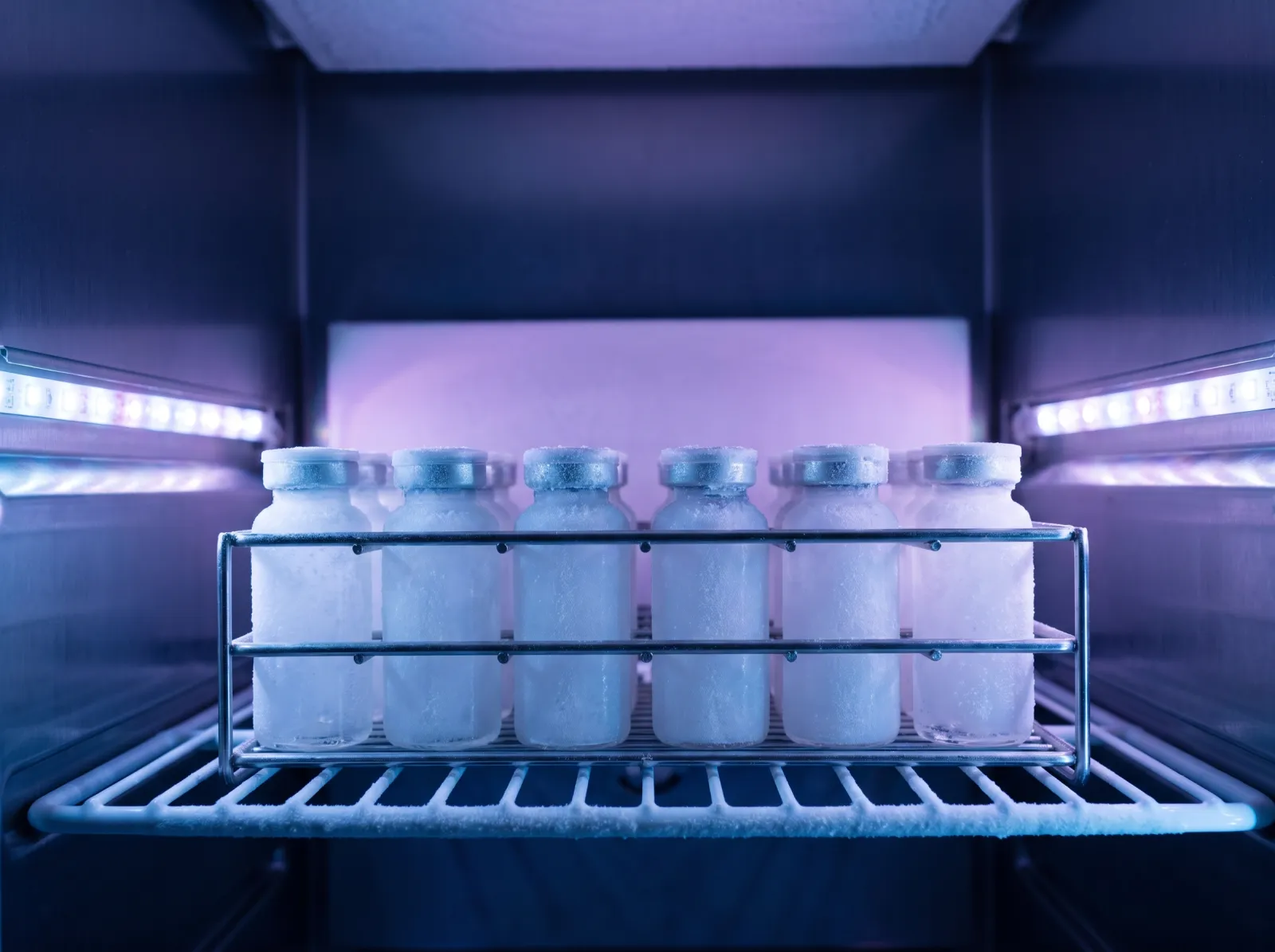
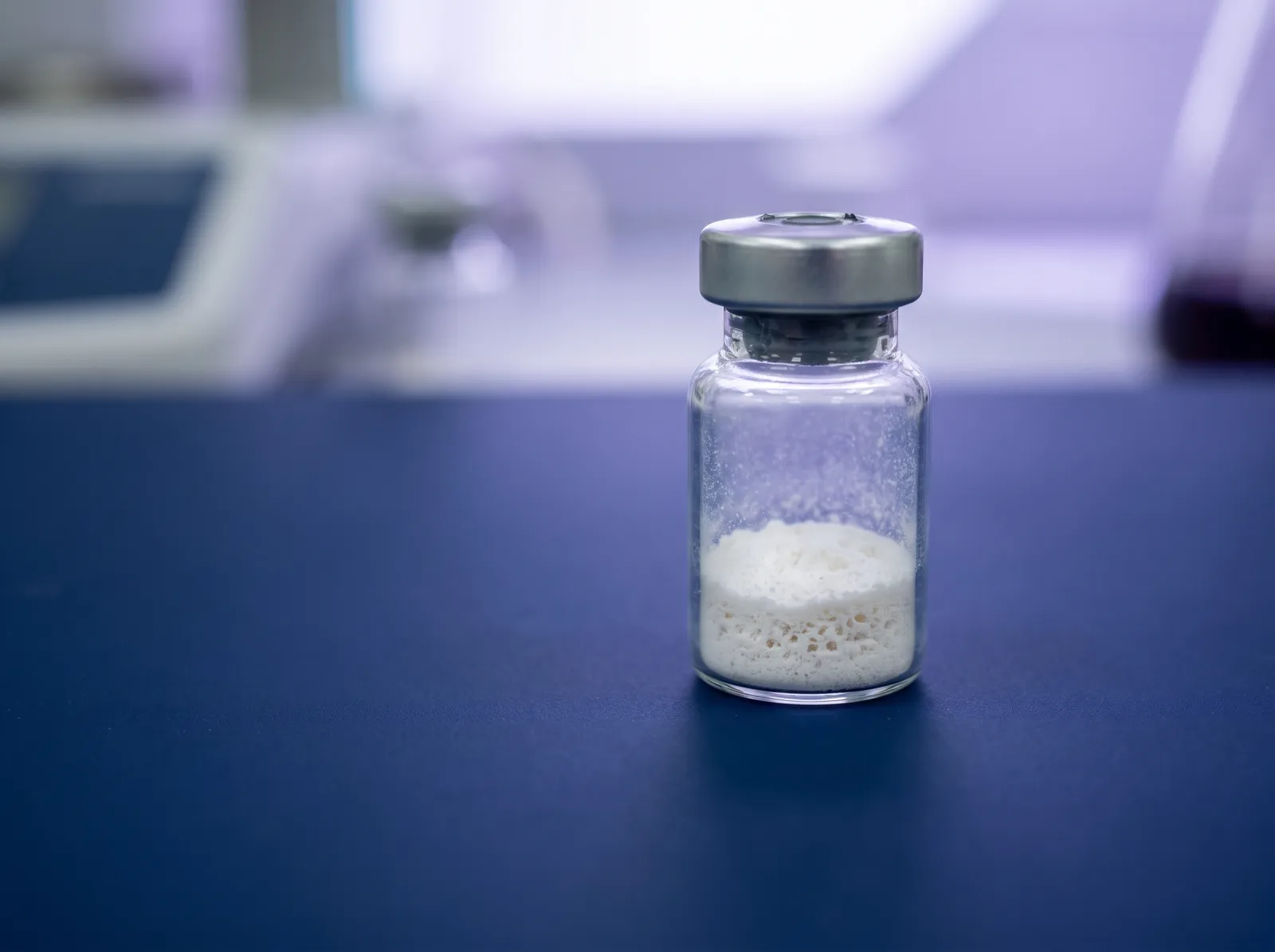
Most research peptides are shipped lyophilized, or freeze-dried: the peptide solution was frozen and its water removed under vacuum, leaving a dry powder or small white “cake” at the bottom of the vial. Peptides are far more stable in that dry state than in solution. GenScript, for example, recommends storing lyophilized peptides at minus 20 degrees Celsius, the temperature at which Flux holds its sealed stock.
Reconstitution reverses the drying step. You add a measured volume of diluent, the solid dissolves, and the result is a solution of known concentration that can be sampled accurately. Done well, the process protects three things: sterility, the integrity of the peptide and the accuracy of your concentration.
Our BPC-157 research vials are a typical case: the listing describes a white lyophilized powder that is soluble in sterile water or bacteriostatic water.
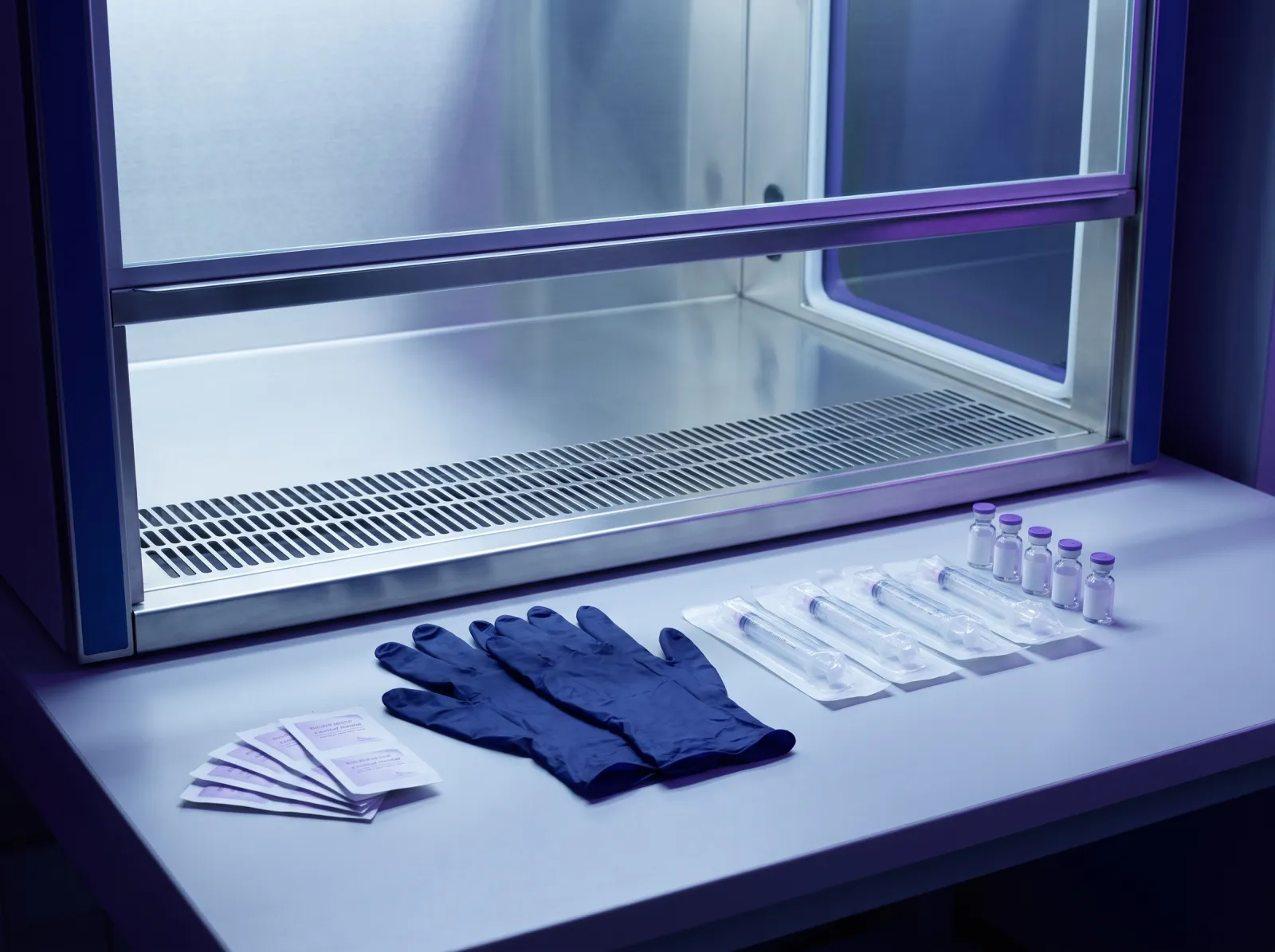
Gather everything first: nitrile gloves, sealed alcohol swabs, a sterile diluent such as our bacteriostatic water for research use, and sterile single-use syringes or pipettes for transferring liquid. A laminar flow hood or other clean workspace is ideal. Then:
Never leave a needle in a stopper, and label the vial as soon as it is made.
Concentration is simple division: the mass of peptide in the vial divided by the volume of diluent added.
Concentration (mg/mL) = peptide mass (mg) ÷ diluent volume (mL)
So 2 mL of diluent in a 5 mg vial gives 2.5 mg/mL, and the same 5 mg in 1 mL gives 5 mg/mL. Adding more diluent makes the solution more dilute; it does not change the total amount of peptide in the vial. To work backwards, divide the mass by the concentration you want: a 10 mg vial made up to 5 mg/mL needs 2 mL.
Two points keep the arithmetic honest. Measure volumes precisely, because any error carries straight into the concentration. And the mass on a label is not always pure peptide: lyophilized peptides are often supplied as salts (Thermo Fisher delivers its standard peptides as trifluoroacetate salts) and can take up moisture, so exact work depends on net peptide content. Our guide to peptide purity testing explains how that differs from HPLC purity.

| Peptide in vial | Diluent added | Concentration |
|---|---|---|
| 5 mg | 1 mL | 5 mg/mL |
| 5 mg | 2 mL | 2.5 mg/mL |
| 5 mg | 3 mL | 1.67 mg/mL |
| 10 mg | 1 mL | 10 mg/mL |
| 10 mg | 2 mL | 5 mg/mL |
| 10 mg | 3 mL | 3.33 mg/mL |
Values are rounded to two decimal places. Which concentration suits an experiment depends on the study design and the compound’s documentation; Flux does not publish dosing or usage protocols.
Most Flux compounds are listed as soluble in sterile water or bacteriostatic water, but not all of them. IGF-1 LR3 is listed as soluble in sterile water or dilute acid buffers such as 0.6% acetic acid, NAD+ in sterile water or phosphate-buffered saline, and SLU-PP-332 in DMSO, with only partial solubility in bacteriostatic water.
GenScript’s solubility guidelines start from the sequence. Peptides shorter than six amino acids generally dissolve in water. For longer ones, overall charge guides the choice: basic and acidic peptides are tried in water first, then in an acetic acid solution or a small amount of ammonium hydroxide respectively (GenScript advises against ammonium hydroxide for cysteine-containing peptides), while neutral or very hydrophobic peptides may need an organic solvent, such as a little DMSO, before dilution. Useful habits:
Label each vial with the compound, concentration, diluent, date and batch identifier. Every Flux order carries a batch ID, and the analysis for that batch is available by emailing fluxpeptides@gmail.com with your order number and batch ID.
Peptides in solution have a much shorter shelf life than lyophilized material, and repeated freeze-thaw cycles should be avoided. Stability varies by compound, so follow its documentation and our guide to storing lyophilized and reconstituted peptides. Lyophilized compounds and diluent are both in the Flux Peptides research shop.
In the lab, let the sealed vial reach room temperature, wipe both stoppers with sterile 70% isopropyl alcohol and let them dry, then add a measured volume of bacteriostatic water slowly down the inside wall of the peptide vial. Swirl or invert gently until the solution is clear. First confirm that the supplier lists bacteriostatic water as a suitable solvent.
There is no single correct volume, because the volume only sets the concentration. As arithmetic, 1 mL in a 5 mg vial gives 5 mg/mL, 2 mL gives 2.5 mg/mL and 3 mL gives about 1.67 mg/mL. The right concentration depends on the experiment. Flux does not publish dosing information or usage protocols, and its products are not for human use.
No. Gentle swirling, rolling or slow inversion is the conservative approach, and Thermo Fisher advises against vortexing or vigorous mixing of protein solutions. If the material still resists, go back to the supplier’s solvent guidance. Thermo Fisher’s peptide instructions suggest sonication or careful warming, not above 40 degrees Celsius.
Often, yes. Most Flux peptide listings name sterile water or bacteriostatic water as suitable solvents. The difference is the preservative: sterile water has none and comes in single-dose containers, so it suits a solution made and used in one session, while bacteriostatic water suits a vial that will be sampled over time.
Flux Peptides supplies research peptides and bacteriostatic water strictly for laboratory research. They are not approved by Health Canada for human or veterinary use, and nothing in this article is medical advice.