
Are Peptides Legal in Canada? What to Know in 2026
Are peptides legal in Canada? Learn how Health Canada regulates peptides as drugs, what research use labels mean, and how WADA rules…
Research guide
September 16, 2026
Is NAD+ a peptide? No. NAD+ (nicotinamide adenine dinucleotide) is a coenzyme built from two nucleotides joined through their phosphate groups, and it contains no amino acids and no peptide bonds. It is not a protein either, although it works alongside many enzymes.
The mix-up is understandable. Research suppliers often list NAD+ beside peptides, and it is studied in overlapping areas such as mitochondrial function and cellular aging. This guide explains what NAD+ is, why it falls outside the peptide family, and what cellular research on NAD+ has and has not shown.
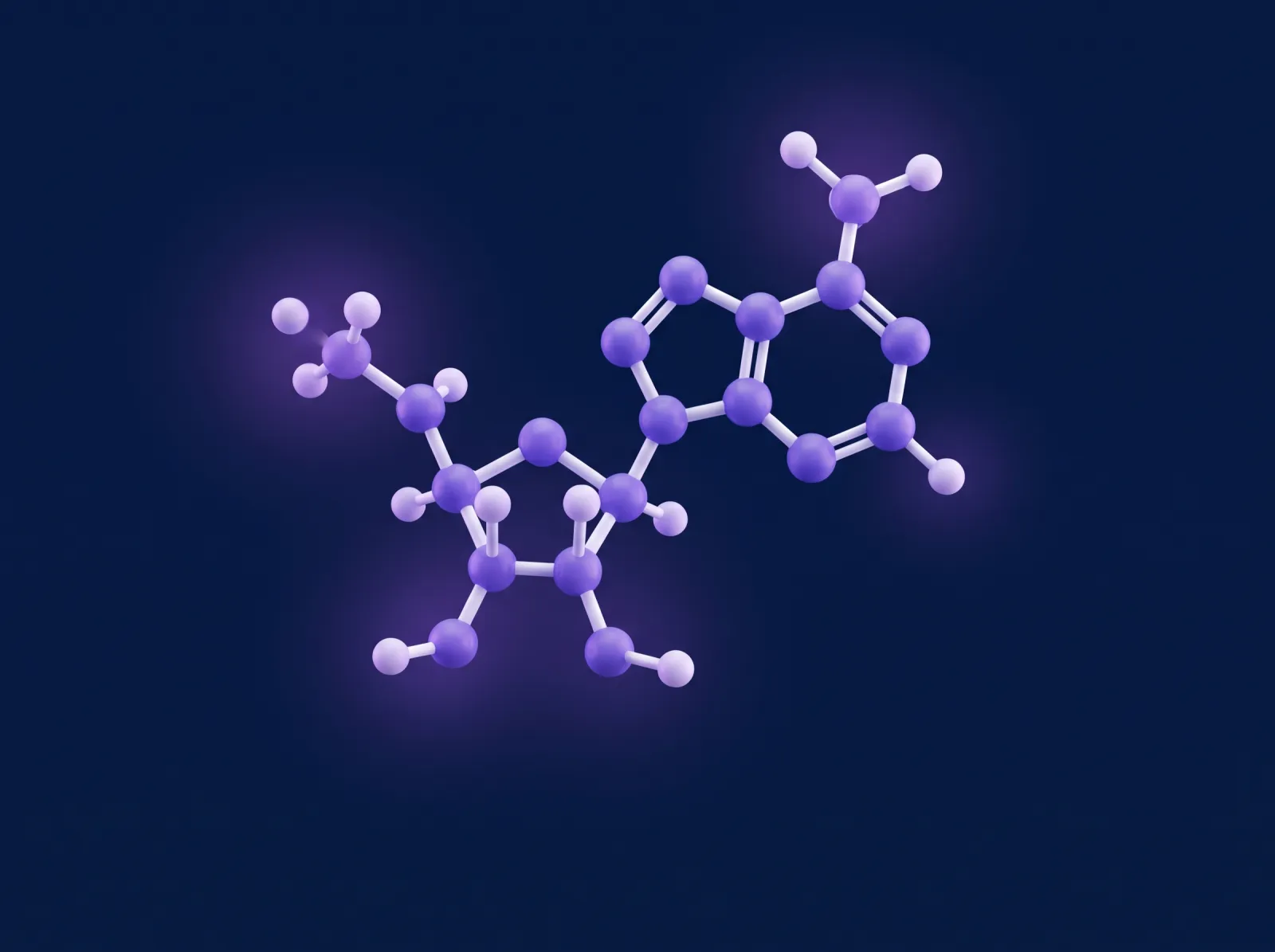
NAD+ stands for nicotinamide adenine dinucleotide. As the name suggests, it is a dinucleotide: two nucleotides joined together. One carries the base adenine, the same base found in ATP and DNA. The other carries nicotinamide, a form of vitamin B3. The two halves are linked through their phosphate groups by a pyrophosphate bond, giving the formula C21H27N7O14P2 and a molecular weight of about 663.
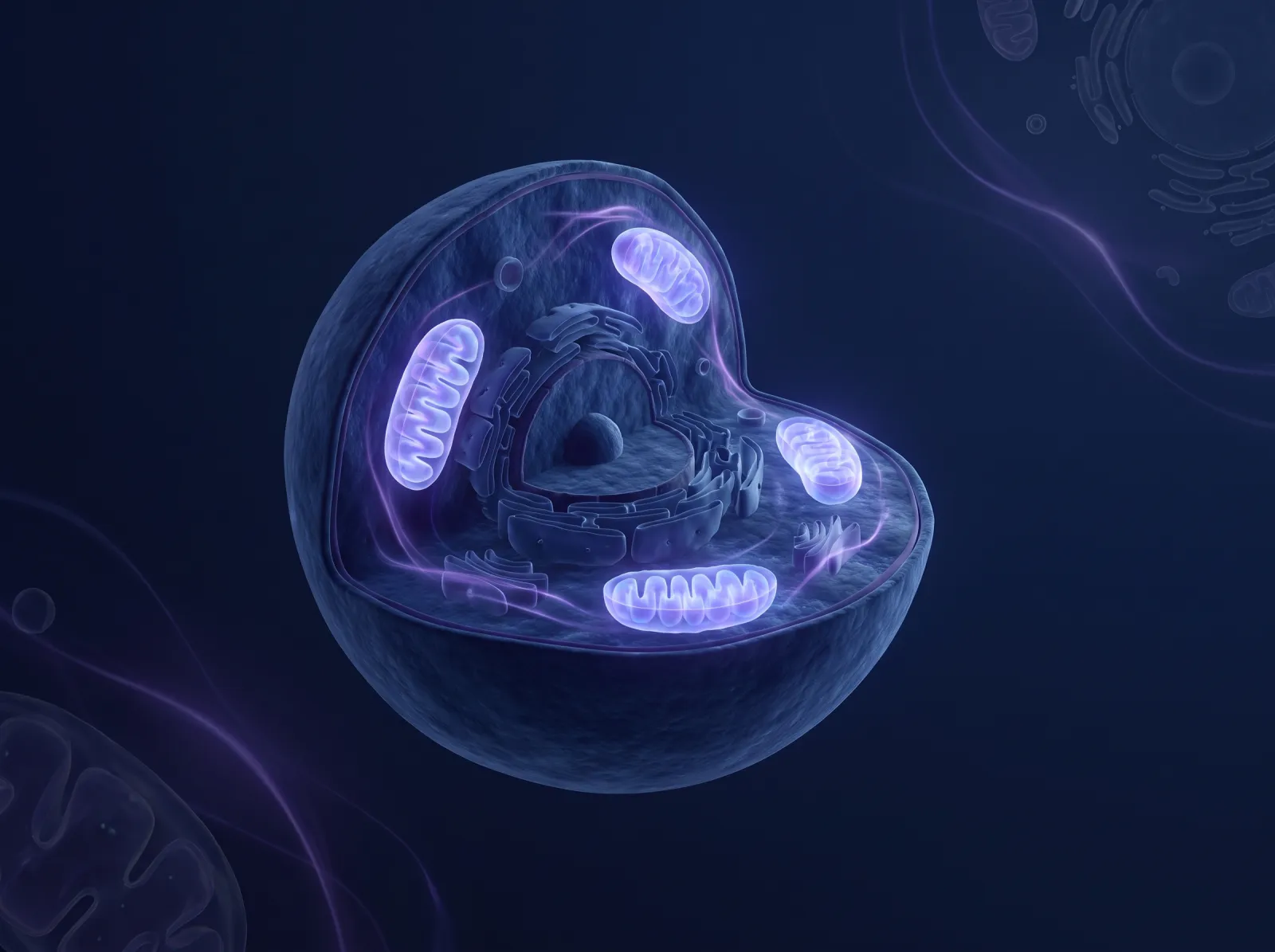
NAD+ is a coenzyme, a small non-protein molecule that enzymes need in order to carry out their reactions. Its best-known job is carrying electrons. The oxidized form, NAD+, accepts electrons released as nutrients are broken down and becomes NADH; NADH then hands those electrons on, including to the mitochondrial respiratory chain that produces ATP. The plus sign in the name marks that oxidized form.
In these redox reactions, NAD+ and NADH are recycled rather than used up. That sets them apart from the NAD+-consuming enzymes described below.
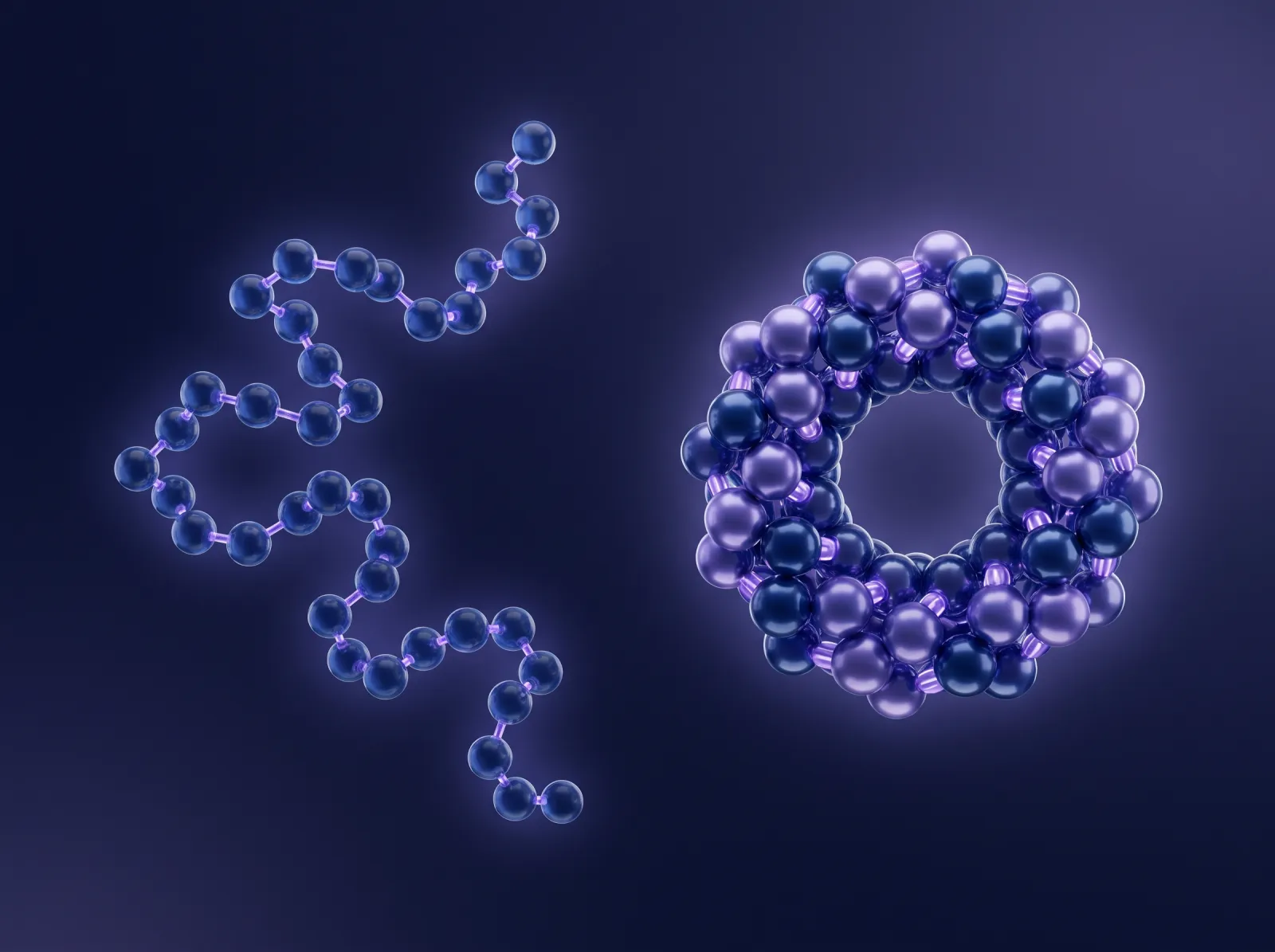
A peptide is a chain of amino acids joined by peptide bonds, the amide links formed between the carboxyl group of one amino acid and the amino group of the next. Short chains are peptides; long, folded chains are proteins. NAD+ fails that definition on every count:
So why does NAD+ sit next to peptides in research catalogues? The reasons are practical. It is supplied as a freeze-dried powder in sealed vials, it is stored and handled in similar ways, its purity is checked by HPLC, and it is studied in overlapping fields such as mitochondrial biology. Sharing a shelf does not make two molecules the same class, a point our guide to whether peptides are steroids makes about another common mix-up.
Beyond redox chemistry, some enzymes break NAD+ apart as part of their reactions. These include sirtuins, a family of regulatory enzymes; PARPs, which take part in DNA repair; and CD38. Those links to DNA repair, gene regulation and metabolism make NAD+ supply a major research topic. What the evidence shows depends on the type of study:
The comparison uses two mitochondria-related research peptides as examples, because they are often discussed in the same context as NAD+.
| Feature | NAD+ | MOTS-c | SS-31 |
|---|---|---|---|
| Molecule class | Dinucleotide coenzyme | Peptide | Peptide |
| Building blocks | Two nucleotides | 16 amino acids | 4 amino acids |
| Main linkage | Pyrophosphate bond | Peptide bonds | Peptide bonds |
| Contains phosphorus | Yes | No | No |
| Role in research | Electron carrier and enzyme substrate | Signalling peptide encoded in mitochondrial DNA | Binds cardiolipin in the inner mitochondrial membrane |
MOTS-c is a 16-amino-acid peptide encoded by a short open reading frame in the mitochondrial 12S rRNA gene. In mouse studies its main target appeared to be skeletal muscle, where its actions were linked to AMPK activation, and treatment was reported to prevent insulin resistance in mice fed a high-fat diet. Flux supplies MOTS-c for laboratory research.
SS-31, also known as elamipretide, is a synthetic tetrapeptide from the Szeto-Schiller family. It binds cardiolipin, a phospholipid of the inner mitochondrial membrane, and has been studied mainly in animal models of impaired mitochondrial energy production. In September 2025 the FDA granted accelerated approval to an elamipretide medicine, Forzinity, to improve muscle strength in patients with Barth syndrome, a rare inherited disease. That medicine is prescribed by clinicians; Flux’s SS-31 research peptide is not that medicine and is not for human use.
Flux Peptides supplies NAD+ for laboratory research alongside its peptide range. Each order carries a batch identifier, and customers can email fluxpeptides@gmail.com with the order number and batch ID to receive the analysis for that batch. Our guide to peptide purity testing explains HPLC results, and the same principles apply to NAD+.
For temperature, light and moisture control, see how to store peptides; freeze-dried stock is held sealed at minus 20 degrees Celsius before dispatch within Canada. Flux does not publish dosing information of any kind, and its products are not for human or veterinary use.
Neither. Peptides and proteins are chains of amino acids linked by peptide bonds. NAD+ is a dinucleotide: two nucleotides joined through a pyrophosphate linkage, with no amino acids at all. It does work closely with proteins, because many enzymes bind NAD+ or NADH as a coenzyme, but binding to a protein does not make it one.
NAD plus is the spoken form of NAD+, short for nicotinamide adenine dinucleotide. The plus sign marks the oxidized form of the molecule, which accepts electrons during metabolism and becomes NADH. NAD+ is also consumed by sirtuins, PARPs and CD38, which is why it features in DNA repair and cell signalling research.
Studies report lower NAD+ in older tissue in both rodents and humans. A cross-sectional study of human skin found lower NAD+ at older ages, alongside higher PARP activity in males. Reviews note, however, that it remains unclear whether restoring NAD+ benefits aging humans, so the significance of the decline is still being studied.
No. Nicotinamide mononucleotide (NMN) and nicotinamide riboside (NR) are precursors that cells convert into NAD+, and they are studied as ways to raise cellular NAD+. Small randomized trials have measured their effects on NAD+ levels and metabolic markers in specific groups, such as healthy older adults and women with prediabetes, but the evidence is still early.
Flux Peptides supplies NAD+ strictly for laboratory research. It is not approved by Health Canada for human or veterinary use, and nothing in this article is medical advice.