Are Peptides Legal in Canada? What to Know in 2026
Are peptides legal in Canada? Learn how Health Canada regulates peptides as drugs, what research use labels mean, and how WADA rules…
Research guide
September 16, 2026
What is bacteriostatic water? It is sterile, nonpyrogenic water for injection that contains a small amount of benzyl alcohol, usually 0.9% (9 mg per mL), added as a preservative. The benzyl alcohol inhibits bacterial growth, so the vial can be entered more than once. That is why it is a common diluent for dissolving lyophilized (freeze-dried) compounds.
This guide explains what is in it, how it compares with sterile water and with products sold as “reconstitution solution”, what laboratories use it for, and the cautions printed on its label.
Bacteriostatic water has two ingredients. The base is Water for Injection made to United States Pharmacopeia (USP) standards, supplied sterile and nonpyrogenic, meaning free of fever-causing substances. To that, manufacturers add benzyl alcohol as a bacteriostatic preservative.
The usual concentration is 0.9% benzyl alcohol, or 9 mg in every millilitre. One Hospira glass vial presentation uses 1.1% (11 mg per mL) instead, so it is worth reading the label even on a familiar product. The same label lists a pH of 5.7, within a range of 4.5 to 7.0.
“Bacteriostatic” means the preservative inhibits the growth of bacteria; it does not guarantee that every organism is killed. That is what allows repeated withdrawals from one container, but it is not a substitute for careful, aseptic handling. Because an opened vial is used over time, its usable life matters, and that is covered in our guide to how long bacteriostatic water lasts.
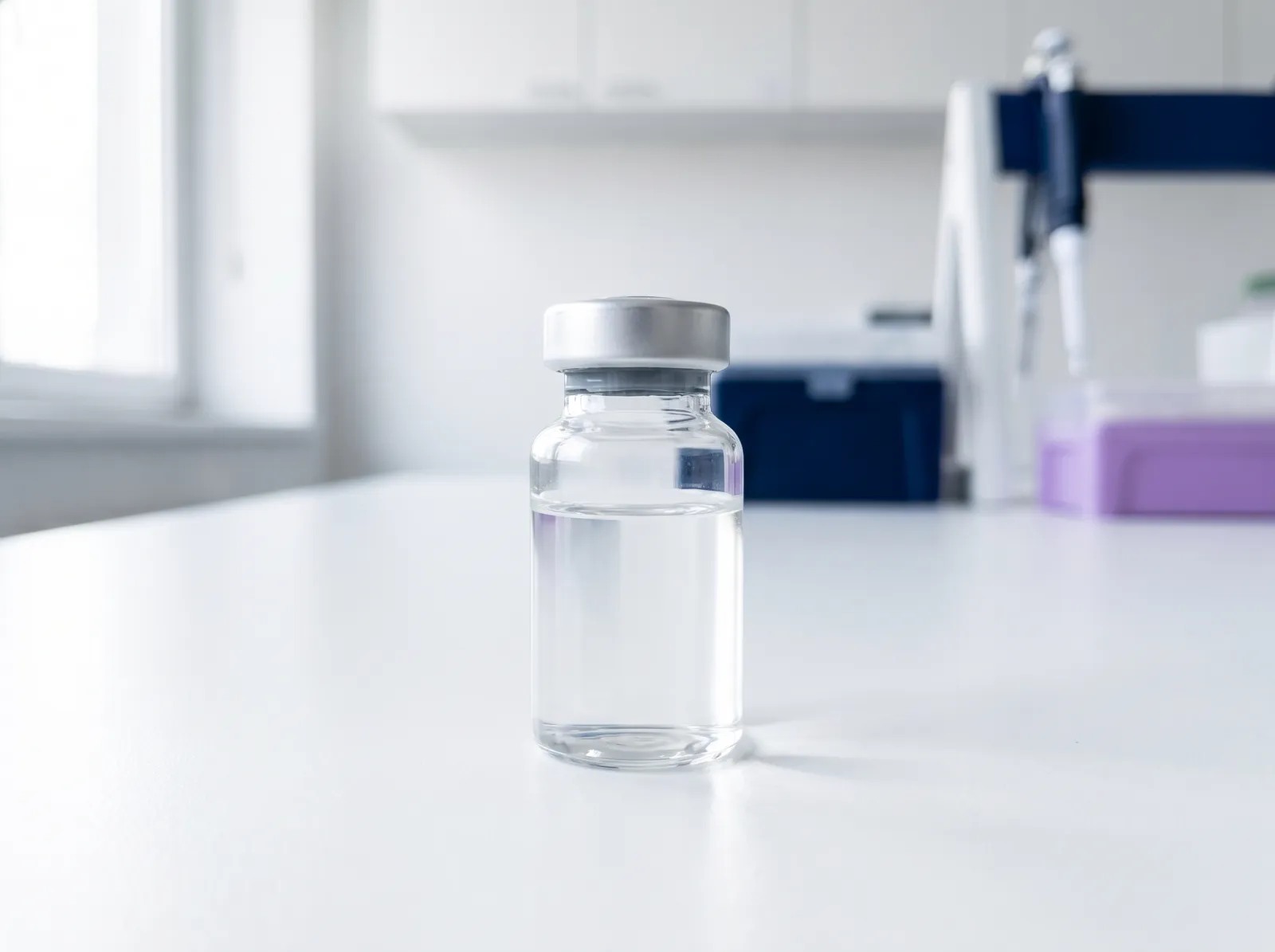
The difference between bacteriostatic water and sterile water comes down to the preservative. Sterile Water for Injection contains no bacteriostat, antimicrobial agent or added buffer, and it is supplied only in single-dose containers. Its label is direct: do not reuse single-dose containers, and discard the unused portion.
Bacteriostatic water, by contrast, is supplied in a multiple-dose container from which repeated withdrawals may be made. Sterile water therefore suits a single, complete use, while bacteriostatic water suits a vial of diluent that will be sampled more than once. Sterile water also avoids benzyl alcohol altogether, which matters when a compound is incompatible with it.
“Reconstitution solution” is different again. It is a descriptive phrase rather than a pharmacopeial product name, so it can refer to bacteriostatic water, plain sterile water, bacteriostatic saline or a diluent made for one specific product. A reconstitution solution may be identical to bacteriostatic water, but only its stated composition can confirm that. Look for the base liquid, the preservative and its percentage, and whether the container is single-dose or multiple-dose.
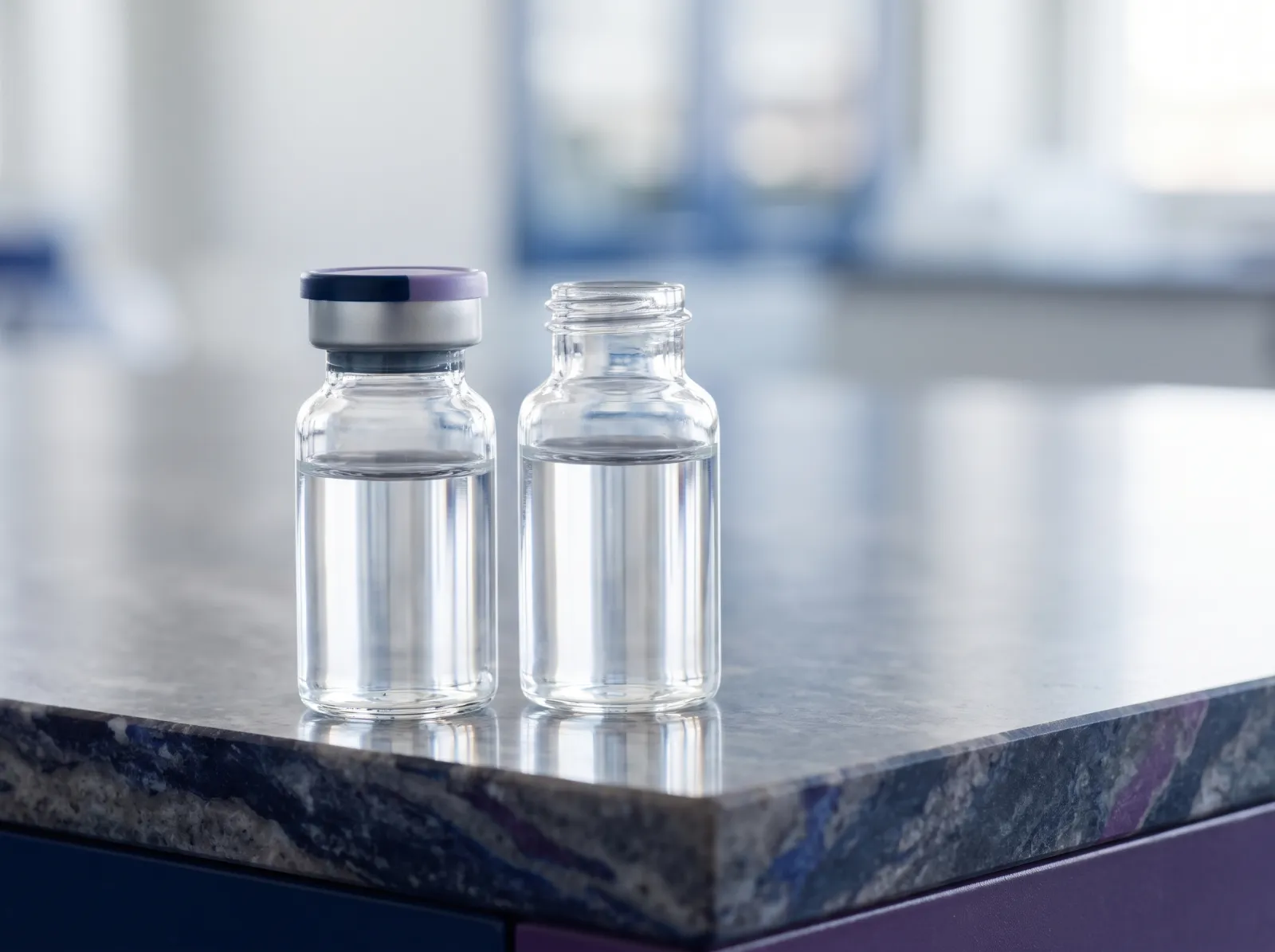
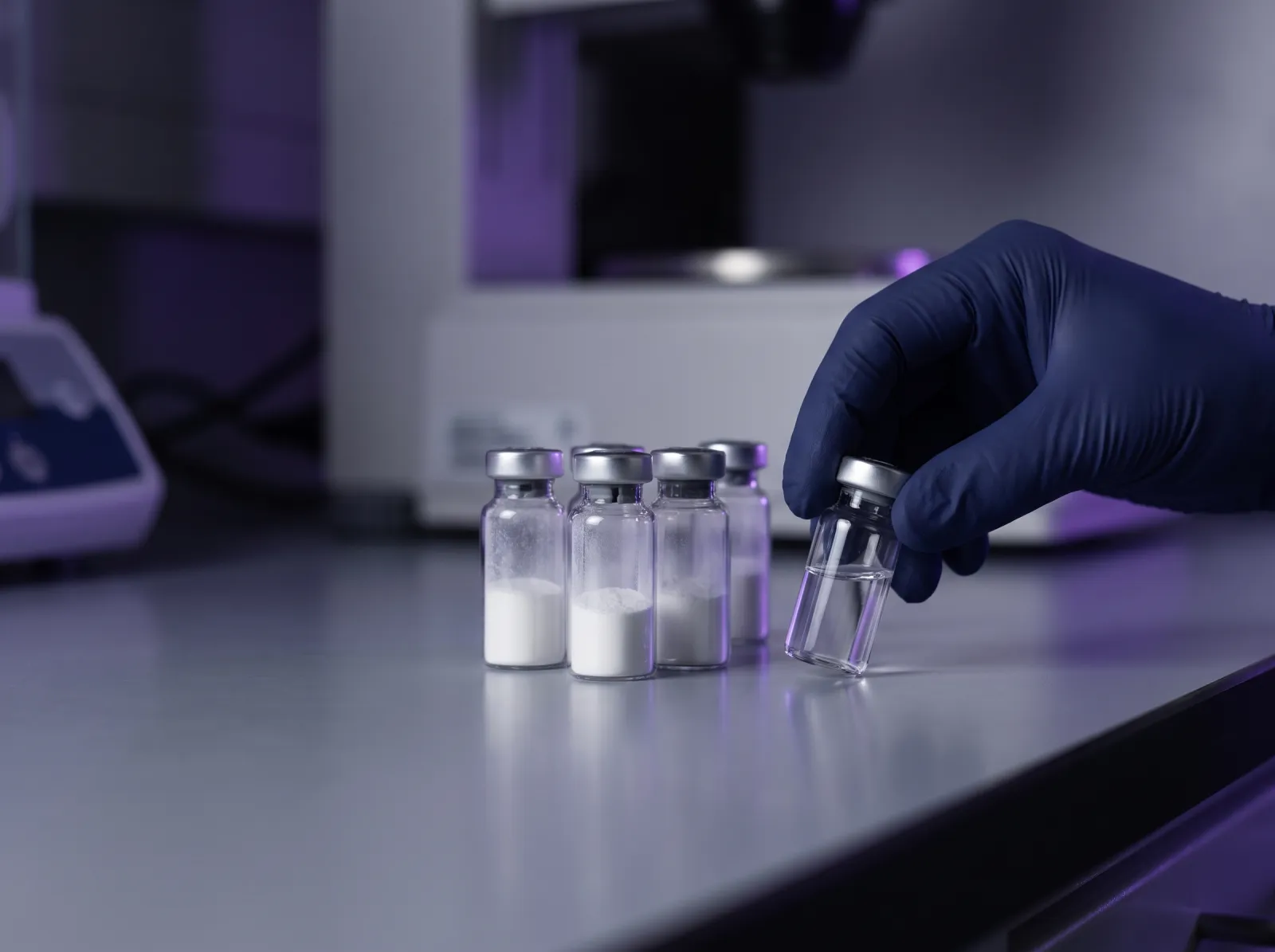
Pharmaceutical labels describe bacteriostatic water as a diluent only, indicated for diluting or dissolving drugs according to the instructions of the drug manufacturer. The laboratory role is the same: researchers use it to dissolve lyophilized peptides and other freeze-dried compounds when one vial of solution will be sampled on more than one occasion. Our lab guide to reconstituting peptides covers the handling steps.
The label also sets out clear limits:
Any question about a medicine or diluent used in a person belongs with a qualified healthcare professional.
| Diluent | Composition | Preservative | Container |
|---|---|---|---|
| Bacteriostatic Water for Injection | Water for Injection | Benzyl alcohol, usually 0.9% | Multiple-dose |
| Sterile Water for Injection | Water for Injection only | None | Single-dose; unused portion discarded |
| Bacteriostatic Sodium Chloride 0.9% | Sodium chloride 9 mg per mL in Water for Injection (isotonic) | Benzyl alcohol 0.9% | Multiple-dose |
| “Reconstitution solution” | Varies by supplier | Varies | Check the label |
Saline is a separate choice from water: the added sodium chloride makes it isotonic, and some product listings name sterile saline as an alternative solvent. Where a supplier specifies a diluent for a compound, that instruction takes priority over any general comparison.
For most lyophilized research peptides, the practical choice is between sterile water and bacteriostatic water, and the deciding question is how the solution will be used. A single, complete use points to sterile water; a vial that will be sampled over time points to a preserved diluent. Some compounds need neither. SLU-PP-332, for example, is listed as soluble in DMSO and only partially soluble in bacteriostatic water.
Our bacteriostatic water for laboratory use is Sterile Water for Injection (USP) with 0.9% benzyl alcohol in a 30 mL multi-use vial, with a listed pH range of 4.5 to 7.0. Lyophilized compounds and diluent are both available in the Flux Peptides research shop. Once a compound is in solution, its stability depends on the compound itself, so see how to store peptides for lyophilized versus reconstituted handling.
No. Both start with sterile Water for Injection, but bacteriostatic water adds benzyl alcohol, usually 0.9%, as a preservative and comes in multiple-dose vials. Sterile Water for Injection has no preservative, is supplied only in single-dose containers, and its label says to discard the unused portion. Which one fits a task depends on whether the vial will be entered once or several times.
Sometimes, but not by definition. “Reconstitution solution” is a descriptive phrase that can be applied to several different liquids, including bacteriostatic water, sterile water and saline. Read the composition: if it lists Water for Injection with 0.9% benzyl alcohol, it is bacteriostatic water under another name. If no composition is stated, treat the liquid as unidentified.
Benzyl alcohol is the preservative. It inhibits the growth of bacteria that could be introduced each time a stopper is punctured, which is what allows repeated withdrawals from a multiple-dose container. A 1982 CDC report noted it is usually used at 0.9% for this purpose. It does not make a contaminated vial sterile again, so aseptic handling still matters.
No. Labels warn that some drugs may be incompatible with a vehicle containing benzyl alcohol, and some research compounds dissolve poorly in water of any kind. Check the supplier documentation first. Flux product listings include a solubility note, and most of our lyophilized peptides are listed as soluble in sterile water or bacteriostatic water.
Flux Peptides supplies bacteriostatic water strictly for laboratory research. It is not approved by Health Canada for human or veterinary use, and nothing in this article is medical advice.