

Are Peptides Legal in Canada? What to Know in 2026
Are peptides legal in Canada? Learn how Health Canada regulates peptides as drugs, what research use labels mean, and how WADA rules…
Research guide
September 16, 2026
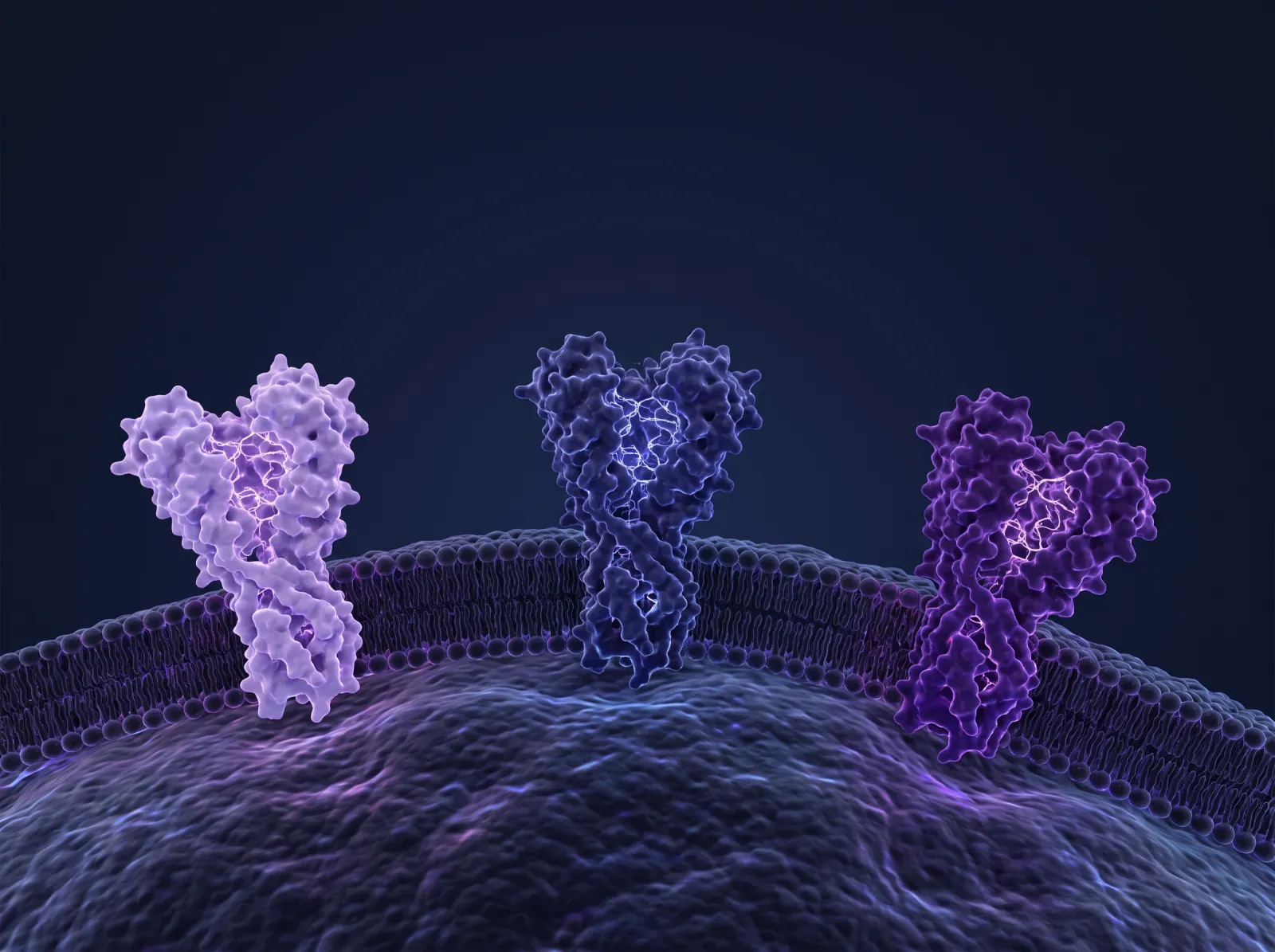
How does retatrutide work? It is a single synthetic peptide that activates three hormone receptors: the receptors for GIP (glucose-dependent insulinotropic polypeptide), GLP-1 (glucagon-like peptide-1) and glucagon. That triple action separates it from semaglutide, which targets the GLP-1 receptor, and tirzepatide, which targets the GIP and GLP-1 receptors.
Retatrutide was discovered by Eli Lilly under the code LY3437943 and has not been approved as a medicine. As of September 2026, Lilly still describes it as investigational. This guide explains each receptor, what makes the molecule a peptide, and what clinical trials have reported so far.
GLP-1 is a hormone released mainly by L-cells in the lower intestine. In research it is best known for three actions: it stimulates insulin secretion in a glucose-dependent way, it slows gastric emptying, and it reduces food intake. GLP-1 receptors are found in the pancreas and in brain regions involved in appetite, including the hypothalamus and brainstem.
Natural GLP-1 lasts only a minute or two in circulation, because the enzyme DPP-4 cleaves it and the kidneys clear it. That is why GLP-1 based compounds are chemically modified to resist breakdown and last longer.
So is retatrutide a GLP-1? Not exactly. It is not the GLP-1 hormone, but it is a GLP-1 receptor agonist: binding and activating that receptor is one of its three actions. In laboratory (in vitro) assays reported by Lilly scientists, its GLP-1 receptor activity was balanced with its glucagon receptor activity, while its GIP receptor activity was stronger.

The three compounds differ in how many receptors they activate:
GIP, like GLP-1, is a gut hormone that enhances insulin release after eating. Glucagon, released by the pancreas, has effects on blood glucose that oppose those of GLP-1, so including it may seem surprising. The rationale is energy balance. In obese mice, Lilly’s discovery team reported that weight loss with retatrutide was augmented because glucagon receptor activity increased energy expenditure, adding to the reduced calorie intake driven by GIP and GLP-1 receptor activity. The same mouse studies reported improved glycemic control.
Semaglutide and tirzepatide are FDA-approved prescription medicines; tirzepatide, for example, was approved as Zepbound for chronic weight management in November 2023. Approved medicines are prescribed by clinicians and are not research products.
The main phase 2 obesity trial, published in the New England Journal of Medicine in 2023, randomized 338 adults without diabetes who had obesity, or overweight plus a weight-related condition, to retatrutide or placebo for 48 weeks. At 48 weeks, mean body weight fell by 8.7% in the lowest-dose group and by 24.2% in the highest-dose group, compared with 2.1% on placebo. The most common adverse events were gastrointestinal, dose-related and mostly mild to moderate, and heart rate rose in a dose-dependent way, peaking at 24 weeks and then declining.
Lilly then launched the phase 3 TRIUMPH program and has announced topline results from several of its trials (see the table below). As of September 2026, retatrutide remains investigational: Lilly’s September 15, 2026 announcement describes it that way, and in July 2026 the company said it was completing the chemistry, manufacturing and controls data package for its application and planned to submit retatrutide for US approval in the first quarter of 2027.
Yes. According to its Global Substance Registration System record, retatrutide is a chain of 39 amino acids with an amidated C-terminal end. Three residues are non-standard alpha-methyl amino acids, including aminoisobutyric acid (Aib) at position 2, the same substitution semaglutide uses at that position to resist DPP-4. The lysine at position 17 carries a 20-carbon fatty diacid, attached through a short spacer made of a gamma-glutamic acid unit and a small ethylene glycol based unit.
The fatty acid matters for how long the molecule lasts. In liraglutide, an approved GLP-1 receptor agonist, an attached fatty acid binds albumin in the blood, making the peptide less susceptible to DPP-4 and limiting its clearance by the kidneys; semaglutide extends the idea with a longer fatty diacid and spacer. Retatrutide carries this kind of modification, so it is best described as a lipidated peptide.
Not everything sold by peptide suppliers is a peptide. Our explainer on whether NAD+ is a peptide covers a common example.
The table lists topline results that Lilly announced in 2026 for three phase 3 trials. Figures are mean body weight change at 80 weeks for the highest dose studied and for placebo, as reported by the company using the efficacy estimand. They are group averages in specific trial populations, not predictions for any individual.
| Trial | Population | Participants and comparator | Mean weight change at 80 weeks |
|---|---|---|---|
| TRIUMPH-1 (May 2026) | Adults with obesity, or overweight plus a weight-related condition, without diabetes | 2,339 randomized; placebo | 28.3% lower, vs 2.2% lower with placebo |
| TRIUMPH-2 (July 2026) | Adults with type 2 diabetes and obesity or overweight | 1,152; placebo | 20.8% lower, vs 4.0% lower with placebo |
| TRIUMPH-3 (July 2026) | Adults with severe obesity and established cardiovascular disease, with or without type 2 diabetes | 1,949; placebo | 22.6% lower, vs 3.2% lower with placebo |
Tolerability also varied with dose. In TRIUMPH-1, 11.3% of participants in the highest-dose group stopped treatment because of adverse events, compared with 4.9% on placebo. Lilly has said it will present phase 3 results, including TRIUMPH-2, at the European Association for the Study of Diabetes meeting on September 30, 2026.
The trials above tested Lilly’s investigational product under clinical supervision. Research-grade retatrutide sold for laboratory work is not that product, and it is not authorized by Health Canada for human or veterinary use. Flux Peptides supplies retatrutide for laboratory research only, assays every batch by HPLC against a minimum 99.0% purity specification, and puts a batch identifier on each order. Flux does not publish dosing or usage protocols of any kind.
For more on the compound’s research history, see our longer retatrutide research guide. For the regulatory framework, read whether peptides are legal in Canada, and consult qualified legal counsel about any specific situation. Other research compounds are listed in the Flux Peptides shop.
Retatrutide is a GLP-1 receptor agonist, but not only that. It activates the GLP-1 receptor together with the GIP and glucagon receptors, so it is classed as a triple hormone receptor agonist. In laboratory assays its GIP receptor activity was stronger than its GLP-1 and glucagon receptor activity, which were roughly balanced.
At the molecular level, retatrutide activates receptors involved in insulin secretion, appetite and energy use. In obese mice, researchers reported lower body weight and improved glycemic control. In placebo-controlled trials in adults with obesity or overweight, researchers reported dose-related average weight reductions compared with placebo, with mainly gastrointestinal adverse events. It is not an approved medicine, and those trial results do not apply to research-grade material.
No approval date exists. In July 2026 Lilly said it planned to submit retatrutide to the FDA in the first quarter of 2027, and its September 15, 2026 announcement still describes the compound as investigational. The FDA would then have to review the application, so any approval date given before a decision is announced is speculation.
Both are peptides that activate GIP and GLP-1 receptors. Retatrutide also activates the glucagon receptor, which in mouse studies added an increase in energy expenditure. Tirzepatide is an FDA-approved prescription medicine, while retatrutide remains investigational as of September 2026, and research-grade retatrutide is not the product tested in clinical trials.
Flux Peptides supplies retatrutide strictly for laboratory research. It is not approved by Health Canada for human or veterinary use, and nothing in this article is medical advice.