
Are Peptides Steroids? How They Differ
Are peptides steroids? No. Peptides are amino acid chains and steroids are four-ring lipids. See how their structure, signalling and legal status…
Research guide
September 16, 2026
Are peptides legal in Canada? Peptides are not banned as a class, and many are authorized prescription medicines. However, Health Canada says peptides are generally regulated as prescription drugs, that injectable peptides must be authorized before they can be sold, and that “For Research Use Only” labelling does not make unauthorized peptide products legal.
This guide summarizes the framework as of September 2026 using the Food and Drugs Act, Health Canada advisories and the World Anti-Doping Agency (WADA) Prohibited List. It is general information, not legal advice; for a specific situation, speak with a qualified Canadian lawyer.
Canada’s Food and Drugs Act defines a drug by its intended use, not its chemistry. A drug includes any substance “manufactured, sold or represented for use in” the diagnosis, treatment, mitigation or prevention of a disease, or in “restoring, correcting or modifying organic functions” in humans or animals.
Drugs need authorization before they reach the market. Under the Food and Drug Regulations, a manufacturer may not sell a drug in dosage form unless a Drug Identification Number (DIN) has been assigned. Health Canada advisories note that authorized health products carry an eight-digit DIN, a Natural Product Number (NPN) or a Homeopathic Drug Number (DIN-HM).
For peptides, Health Canada’s position is explicit. Its April 2026 advisory states that “peptides are generally regulated as prescription drugs,” and a July 2026 news release adds that injectable peptides “must be authorized by Health Canada before they can be sold.” Unauthorized drug products, the department says, have not been assessed for safety, efficacy and quality, and selling them is illegal.
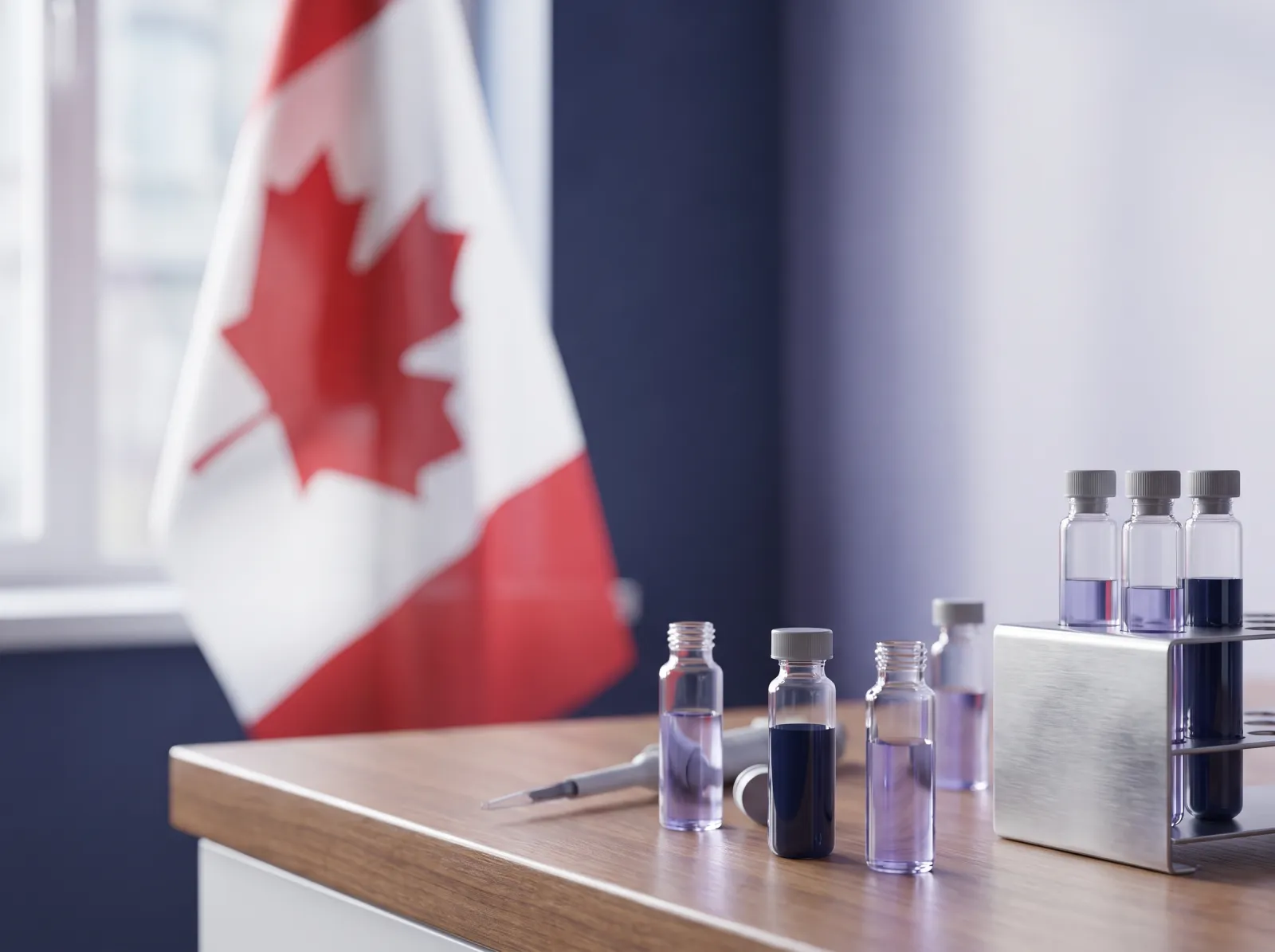
A “research use only” label states the seller’s intended use: laboratory work such as cell culture assays or analytical testing, not use in people or animals. It describes intent; it is not a Health Canada authorization and does not stand in for a DIN.
Health Canada has addressed these labels directly. In its April 2026 advisory, the department said it continues to find products marketed for research use only and not for human consumption, adding: “This type of labelling does not make these products legal or exempt from regulatory requirements.” It advised Canadians not to buy or use products labelled that way.
Marketing aimed at human use draws particular scrutiny. The advisory describes peptides promoted for “anti-aging”, weight loss, bodybuilding and “wellness”. In June 2026, the Superior Court of Québec granted Health Canada a permanent injunction against a Québec-based online retailer that had sold unauthorized peptide drugs with unproven health claims. In the department’s words, “selling unauthorized prescription drugs or making false or misleading claims to prevent, treat or cure illnesses is illegal in Canada.”
How these rules apply to a specific product or business is a question for a qualified lawyer.

Sport has its own rulebook. WADA’s 2026 Prohibited List, in force since 1 January 2026, prohibits these classes at all times, in and out of competition:
In April 2026, Sport Integrity Canada (formerly the Canadian Centre for Ethics in Sport) reminded the Canadian sport community that use, possession or trafficking of non-approved peptides such as BPC-157 could result in an anti-doping rule violation. Athletes can check medications through Global DRO or send substance inquiries to Sport Integrity Canada.
At the border, Health Canada says it is working with the Canada Border Services Agency to stop unauthorized shipments from entering the country. Import rules depend on the product and circumstances and are not covered here; rely on official guidance at canada.ca or a lawyer.

BPC-157 is a synthetic 15-amino-acid peptide with no Health Canada authorization as a drug. Health Canada named it in advisories about unauthorized injectable peptide drugs in August 2025 and April 2026, and WADA lists it under S0, the class for substances with no current approval by any governmental regulatory health authority for human therapeutic use.
So is BPC-157 available in Canada? Not as an authorized medicine. Some Canadian suppliers, Flux among them, list BPC-157 as a laboratory research material and state that it is not for human or veterinary use. Health Canada’s position, quoted above, is that research-use labelling does not make unauthorized products legal or exempt from regulatory requirements. Whether a specific sale, purchase or use complies with the law is a question for legal counsel.
This table summarizes what official sources say about common situations. It is not a legal opinion.
| Situation | What official sources say |
|---|---|
| An authorized peptide medicine with a DIN, such as semaglutide (Ozempic) | Authorized for sale. Health Canada advises buying prescription drugs only from licensed pharmacies. |
| An unauthorized peptide sold online for anti-aging, bodybuilding or wellness | Health Canada: unauthorized drugs are illegal and have not been assessed for safety, efficacy and quality. |
| A peptide labelled for research use only, not for human consumption | Health Canada: this labelling “does not make these products legal or exempt from regulatory requirements.” |
| BPC-157 in competitive sport | WADA class S0: prohibited at all times. |
| Controlled substance status | Anabolic steroids are in Schedule IV of the Controlled Drugs and Substances Act; peptides such as BPC-157, TB-500 and CJC-1295 are not named in its schedules. |
For why steroids and peptides are classified so differently, see Are Peptides Steroids? How They Differ.
It depends on the purpose. For a person, Health Canada’s advice is to use prescription drugs under a healthcare professional’s care, buy them only from licensed pharmacies and check the label for an eight-digit DIN. Research peptides are not a substitute for prescribed medicines.
For laboratories, the questions are documentation and compliance. A research supplier should provide batch-level analysis and should not make health claims or publish dosing information. Flux assays every batch by HPLC against a minimum 99.0% purity specification, ties each order to a batch identifier and states in its FAQ that it does not publish dosing information; our guide to peptide purity testing explains how to read that documentation. Institutions should route purchases through their own compliance and legal review, and the Flux research catalogue is intended only for laboratory work.
Not as a category. Many peptides are authorized prescription medicines sold through licensed channels. What Health Canada treats as illegal is selling unauthorized peptide drugs: it has seized products, issued advisories and, in June 2026, obtained a permanent court injunction against an online seller. Unlike anabolic steroids, research peptides such as BPC-157 are not listed as controlled substances.
Not as an authorized medicine. BPC-157 has no Health Canada authorization for human or veterinary use, and Health Canada has named it in advisories about unauthorized injectable peptide drugs. Some Canadian suppliers list research-grade BPC-157 for laboratory use only, but Health Canada says research-use labelling does not make unauthorized products legal. Questions about a specific purchase belong with a lawyer.
No. WADA’s 2026 Prohibited List names BPC-157 under S0, non-approved substances, which are prohibited at all times, in and out of competition. In April 2026, Sport Integrity Canada reminded the Canadian sport community that use, possession or trafficking could result in an anti-doping rule violation. Athletes can check medications through Global DRO or send substance inquiries to Sport Integrity Canada.
Look for an eight-digit Drug Identification Number (DIN) on the label, or a Natural Product Number (NPN) for a licensed natural health product. Either can be confirmed in Health Canada’s Drug Product Database or Licensed Natural Health Product Database. If a product sold for use in people has neither, ask a pharmacist before going further.
Flux Peptides supplies BPC-157 and its other peptides strictly for laboratory research. They are not approved by Health Canada for human or veterinary use, and nothing in this article is medical advice.