Flux Peptides
$0.00 0

Cart

No products in the cart.

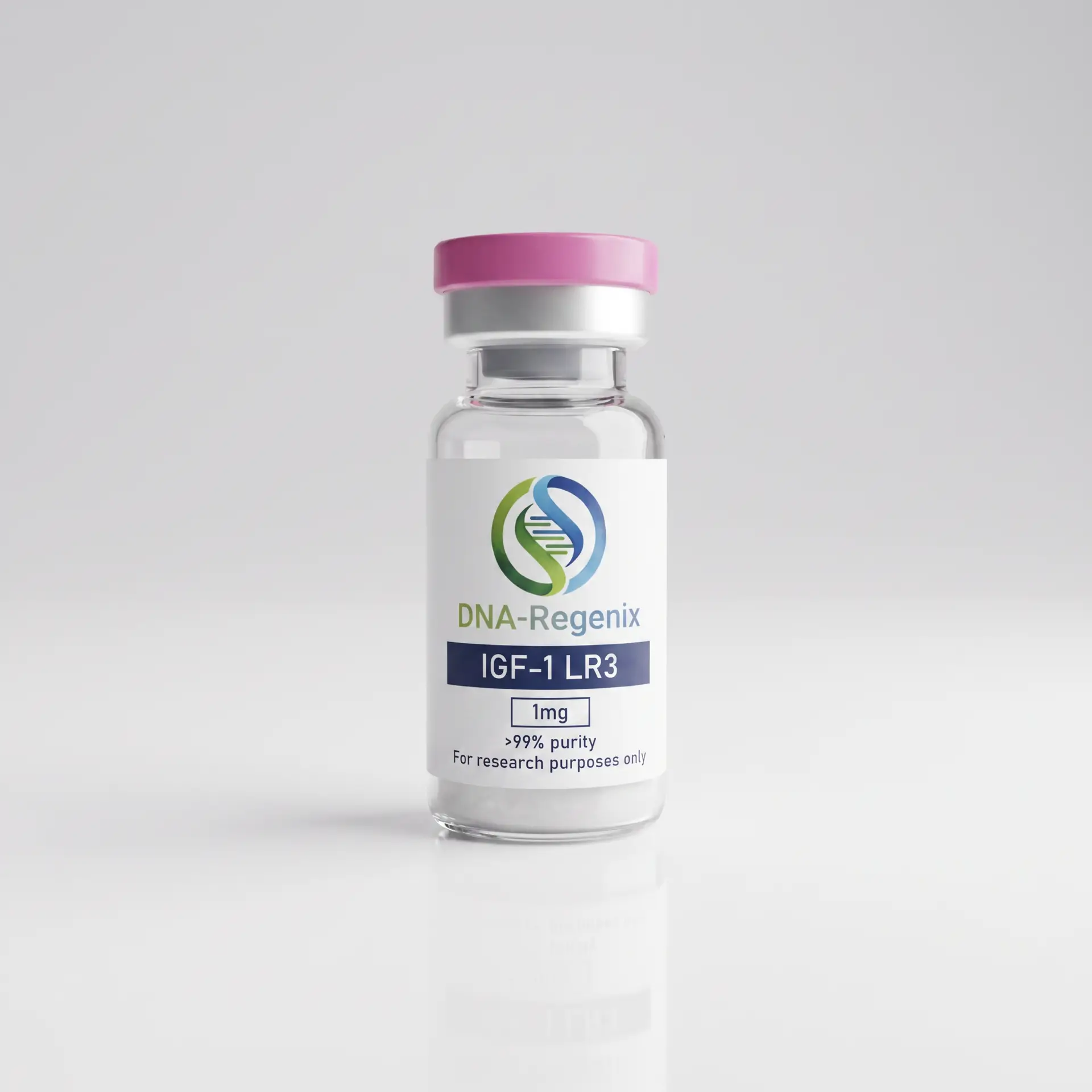
IGF-1 LR3 1mg

$80.00

IGF-1 LR3 (Long Arg3 IGF-1) is a recombinant 83 amino acid analogue of human insulin-like growth factor 1. It differs from the native protein by an arginine for glutamic acid substitution at position 3 and a 13 residue extension at the N terminus, and both changes lower its affinity for IGF binding proteins (IGFBPs). It is used as a cell culture supplement and as a research tool in studies of type 1 IGF receptor signalling. This vial contains 1mg.

  • Purity: ≥99.0% (HPLC tested)
  • Receptor Target: Type 1 IGF receptor (IGF1R)
  • Format: Lyophilized powder for laboratory research
  • Key Research Focus: IGF1R signalling, IGFBP binding and cell culture supplementation
  • Storage: Store at minus 20 degrees Celsius, sealed and protected from light and moisture
Category:

Description

IGF-1 LR3 Overview

IGF-1 LR3 is a recombinant analogue of human insulin-like growth factor 1, a single chain of 83 amino acids. Mature native IGF-1 is 70 amino acids. IGF-1 LR3 adds a 13 residue extension at the N terminus (MFPAMPLSSLFVN) and substitutes arginine for glutamic acid at position 3 of the IGF-1 sequence. Both modifications lower its affinity for IGF binding proteins, which is the reason it is used in cell culture in place of native IGF-1.

Recombinant human IGF-1 itself exists as an approved medicine. Mecasermin, sold as Increlex, was first approved in the United States in 2005 for growth failure in pediatric patients with severe primary IGF-1 deficiency or growth hormone gene deletion. Mecasermin is the unmodified 70 amino acid human sequence with three intramolecular disulfide bridges. IGF-1 LR3 is a different molecule. It is not mecasermin, it is not an approved medicine, and the material supplied here is a research chemical.

Technical Specifications

  • Protein Name: IGF-1 LR3
  • Synonyms: Long R3 IGF-1, Long Arg3 IGF-1
  • Chain Length: 83 amino acids (13 residue N terminal extension plus the 70 residue IGF-1 chain carrying the Glu3Arg substitution)
  • CAS Number: 143045-27-6
  • Molecular Formula: C400H619N111O115S9 with the three disulfide bonds formed, or C400H625N111O115S9 for the fully reduced chain
  • Molar Mass: approximately 9111.5 g/mol with disulfide bonds formed, approximately 9117.5 g/mol reduced
  • Purity: ≥99.0% (determined by HPLC)
  • Appearance: White to off-white lyophilized powder
  • Solubility: Soluble in dilute acid, for example 0.6% acetic acid, and in sterile water

Research Context
Areas that have been examined in the published literature include:

  • IGF1R binding and signalling: IGF-1 LR3 binds the type 1 IGF receptor. Work in this area measures receptor autophosphorylation and downstream PI3K/Akt and MAPK pathway activity.
  • IGF binding protein affinity: The two structural modifications reduce binding to IGFBPs, which is the documented basis for using the analogue as a cell culture supplement.
  • Cell proliferation and survival: Cell culture studies have measured proliferation rates and apoptosis markers in lines exposed to IGF-1 LR3.
  • Glucose handling: IGF-1 analogues are used in assays that measure glucose uptake, reflecting activity across the insulin receptor family.

These are observations in laboratory models and should not be read as describing effects in a person or an animal outside a controlled study.

Storage and Handling

  • Lyophilized (powder): Store at minus 20 degrees Celsius, sealed and protected from light and moisture; see the batch documentation for the retest date.
  • Reconstituted (liquid): Keep refrigerated at 4 degrees Celsius and protected from light. The retest date in the batch documentation applies to the sealed lyophilized vial only.
  • Handling: Standard laboratory safety protocols apply. This product is for laboratory research use only.

Testing and Quality Control
Every batch of IGF-1 LR3 1mg is released against the following checks:

  1. HPLC (high-performance liquid chromatography): to confirm a purity profile of ≥99.0%.
  2. MS (mass spectrometry): to confirm the molecular weight and identity of the protein.
  3. Visual verification: to confirm the integrity of the lyophilized cake.

For laboratory research use only. Not for human or veterinary use.

Further reading