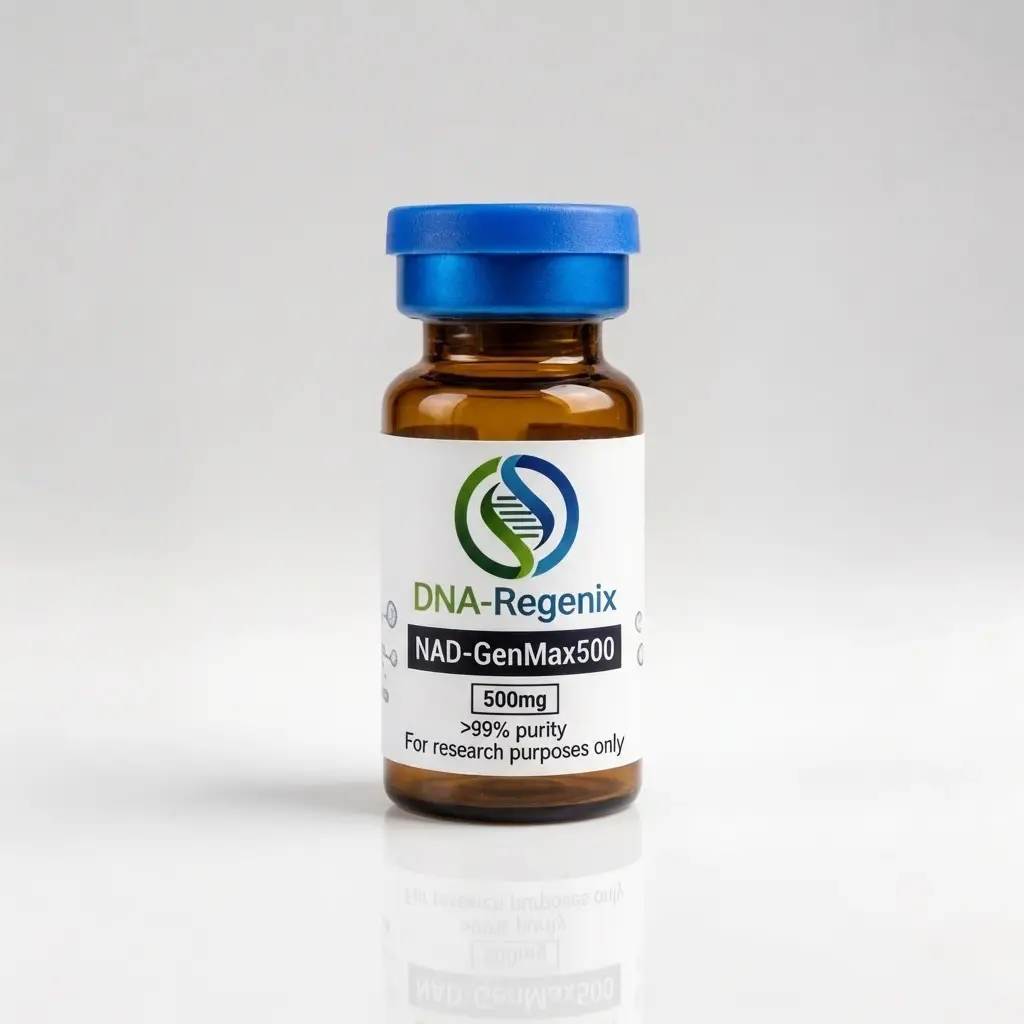
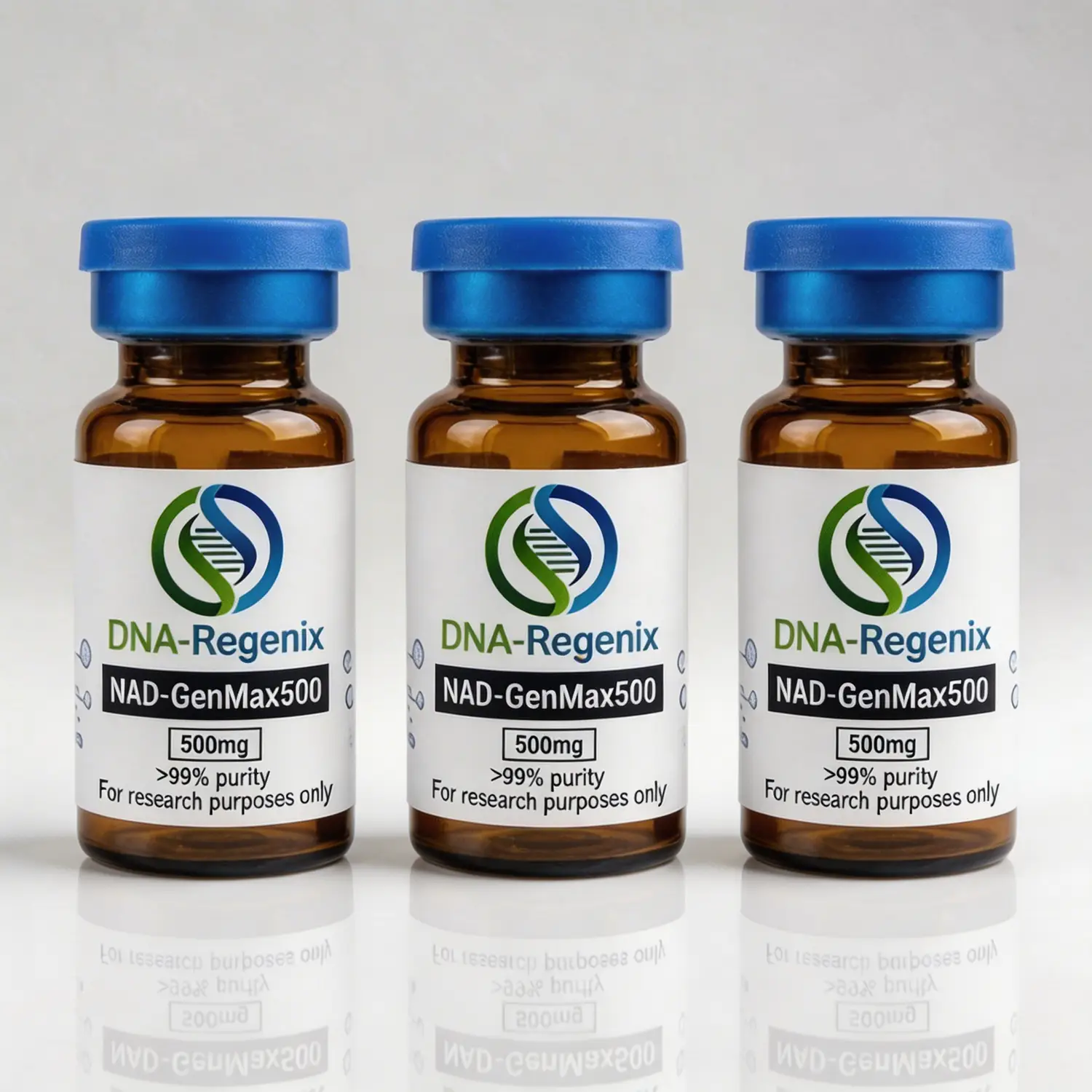
Description
Nicotinamide Adenine Dinucleotide (NAD+) Overview
NAD+ is a dinucleotide coenzyme found in all living cells. It is not a peptide: the molecule is built from nicotinamide mononucleotide joined to adenosine monophosphate through a pyrophosphate bridge. As the oxidized form of nicotinamide adenine dinucleotide, it serves as an electron carrier in redox reactions and as a cofactor for enzymes involved in energy metabolism.
NAD+ is also a substrate, rather than only a cofactor, for the sirtuins and for the PARP (poly ADP-ribose polymerase) enzymes, which is why it appears in published work on DNA repair and genomic stability. Unlike its precursors NMN and NR, NAD+ itself is studied directly, and laboratory interest centres on its availability to mitochondrial metabolism and on measured markers of cellular aging.
NAD+ Technical Specifications
- Compound Name: NAD+ (a dinucleotide coenzyme)
- Synonyms: Nicotinamide adenine dinucleotide (oxidized form), nadide, beta-NAD, coenzyme I, diphosphopyridine nucleotide (DPN)
- CAS Number: 53-84-9
- Molecular Formula: C21H27N7O14P2
- Molar Mass: 663.43 g/mol (monoisotopic exact mass 663.109)
- Purity: ≥98.0% (determined by HPLC)
- Appearance: White to yellowish lyophilized powder
- Solubility: Highly soluble in sterile water or phosphate-buffered saline (PBS)
Mechanism of Action (Research Context)
NAD+ participates in three well characterised areas of cell biochemistry that laboratory work draws on:
- Mitochondrial ATP Production: NAD+ is a component of the electron transport chain. It accepts electrons from other molecules and is reduced to NADH, a step in the production of cellular ATP.
- Sirtuin Co-substrate: NAD+ is a required co-substrate for the sirtuin enzymes (SIRT1 to SIRT7). These enzymes are studied for their roles in epigenetic regulation, stress responses and metabolic regulation.
- DNA Repair and PARP Activity: PARP enzymes consume NAD+ while marking and repairing damaged DNA strands. Published work examines how NAD+ availability relates to PARP activity, which is why the molecule features in studies of cellular senescence and in oncology research.
NAD+ Storage and Handling
- Lyophilized (Powder): NAD+ is hygroscopic and light sensitive. Store at minus 20 degrees Celsius, sealed and protected from light and moisture; see the batch documentation for the retest date. It is not thermally stable at room temperature over the long term.
- In Solution: Once dissolved in a research solvent, keep the solution at 4 degrees Celsius and protected from light, and treat it as suitable for experimental work for up to 7 to 10 days.
- Handling: Wear protective gloves and eyewear.
Testing and Quality Control
Every batch of NAD+ is checked by:
- HPLC (High-Performance Liquid Chromatography): to confirm the purity profile against the ≥98.0% specification.
- MS (Mass Spectrometry): to confirm the molecular weight and chemical identity.
- Visual Inspection: to confirm the integrity of the lyophilized cake.
For laboratory research use only. Not for human or veterinary use.
Further reading